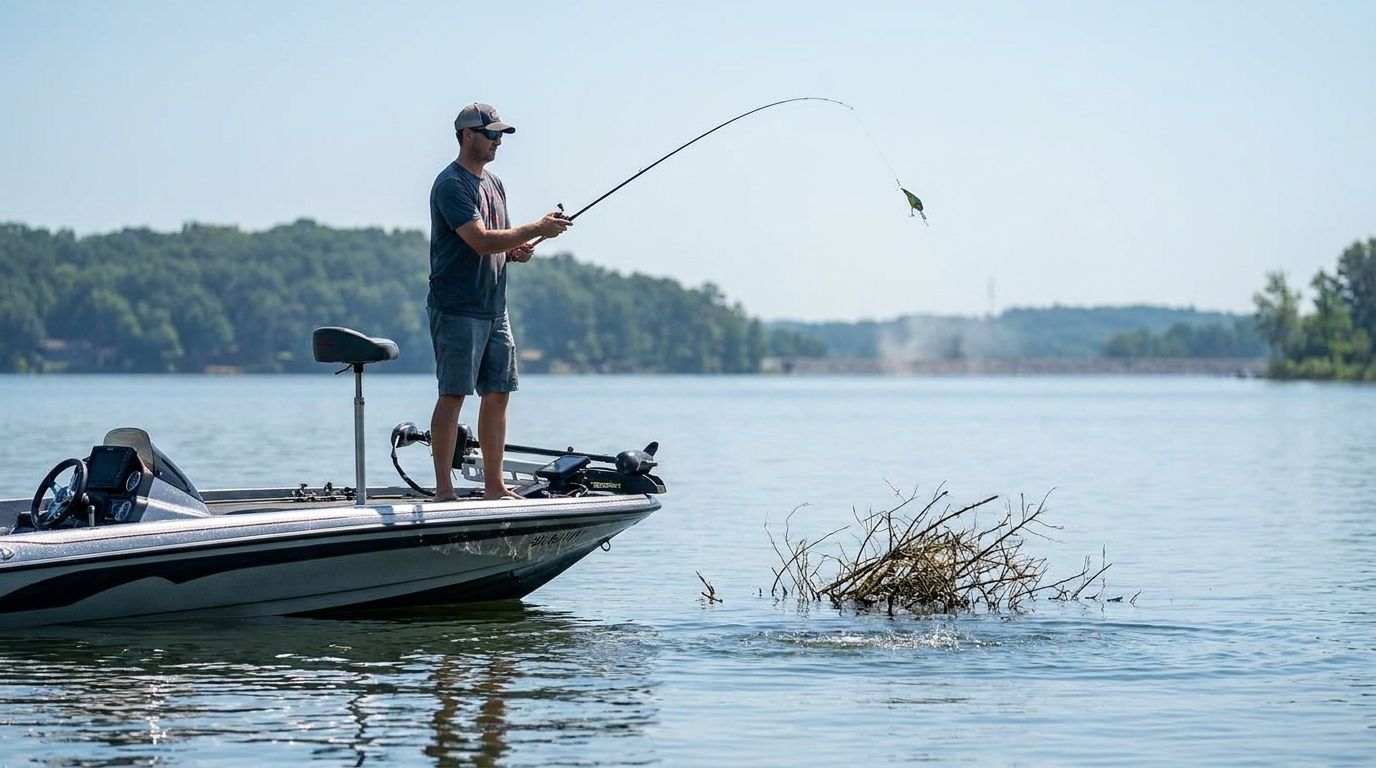
The Summer Transition
The change from spring to summer patterns isn't a single moment — it's a gradual transition that happens differently on every body of water. On a Georgia reservoir, summer patterns may lock in by mid-May. On a Michigan natural lake, true summer fishing might not arrive until July.
The trigger is consistent: sustained water temperature above 72°F pushes bass into summer behavior. They stop relating primarily to spawning habitat and transition to a dual-existence pattern — shallow activity at low-light periods, offshore structure and deep cover during the day.
Understanding when this transition is happening (and adjusting before it's fully complete) gives you a head start on summer fishing.
Where Bass Go in Summer
Offshore Structure
The most significant behavioral shift of the year. Bass that have been fishing in 2–12 feet all spring move to deeper offshore structure — main-lake ledges, offshore humps, channel bends — as water temperatures climb.
In TVA and Midwest reservoirs, this means 18–35 foot ledges with hard bottom. On natural lakes, it means the first significant depth breaks off primary points, typically 15–25 feet. On smaller impoundments, bass may not have true "offshore" structure — they compress into the deepest available areas instead.
The peak of this offshore pattern runs from late June through early September in most of the country.
Matted Vegetation
On lakes with significant aquatic vegetation, mats become prime summer habitat. Bass under mats are cooler than the surrounding water, have access to prey, and are protected from direct sun. The punch bait technique — covered in Punching Matted Vegetation — and frog fishing are the primary approaches.
Deep Docks with Shade
Boat docks over deep water become summer magnets. Floating docks with a large shade footprint over 10–20 feet hold bass throughout the day. The fish sit in the shade column, often suspended 6–10 feet down.
A finesse rig dropped vertically under these docks, or a jig swum at 8 feet through the shade, produces mid-day fish when almost nothing else works.
Wood Cover in Deep Water
Submerged timber and brush piles in 15–25 feet hold summer bass that aren't on ledges. They relate to the wood for the same reasons they relate to other structure — it breaks current, concentrates forage, and provides a physical reference point.
Timing Your Summer Trips
Summer bass follow the sun. Their daily schedule is more predictable than any other season:
Dawn to 8 AM: Shallow feeding. Topwater time. Bass move from daytime deep-water positions to shallow vegetation edges, rip-rap, and points to feed. The shad spawn (which extends through early summer) keeps bass shallow and active at first light.
8 AM to noon: Bass transitioning. Some fish move off. The productive shallow windows narrow as sun rises.
Noon to 6 PM: Peak heat, deepest positioning. Offshore structure, mats, and dock shade. Mid-day summer fishing is genuinely difficult without good electronics.
6 PM to dark: Second shallow movement. Bass return to shallow structure and edges as light diminishes. Topwater and swim jig again.
Night: The wild card. Summer nights — particularly on clear, full-moon periods — produce exceptional bass fishing on topwater and jigs in shallow water. Bass that were 30 feet down all day can be in 4 feet at midnight.
Techniques That Transition from Spring to Summer
Chatterbait: The bladed jig that crushes fish in pre-spawn continues to produce through early summer, particularly in vegetation. Stays productive until bass fully commit to offshore structure. See Chatterbaits in Spring.
Swim jig: Works through the transition, particularly on vegetation edges and around docks. As fish go deeper, add weight (1/2 oz) and target dock pilings in 8–12 feet.
Topwater: Extends from the post-spawn window into early summer, shifting progressively toward dawn-only and dusk-only as temperatures rise. The morning window shortens. Night fishing replaces the long afternoon bite.
Texas rig: Never wrong. In summer, moves deeper — inside grass at 6–10 feet, around deep wood, off the face of ledges.
Offshore Summer Preview
The offshore summer pattern deserves its own preparation. Anglers who struggle with it generally haven't spent the time learning to use electronics effectively for finding offshore fish.
The essentials:
- Find main-lake ledges and offshore humps using lake maps
- Verify structure with down imaging before fishing
- Mark fish on 2D sonar, position over them, and work vertical presentations
- Football jigs, Carolina rigs, and drop shots carry the offshore pattern
See Using Your Fish Finder to Locate Summer Bass for the electronics approach, and Main-Lake Points in Summer for the location strategy.
The Offshore Deep Shad Kit is built for summer offshore fishing — the presentations that reach fish at ledge depth.
For the overall seasonal arc, check the Seasonal Fishing Calendar and What Bass Eat by Season.
Summer pattern deep coverage at Bassmaster and In-Fisherman.