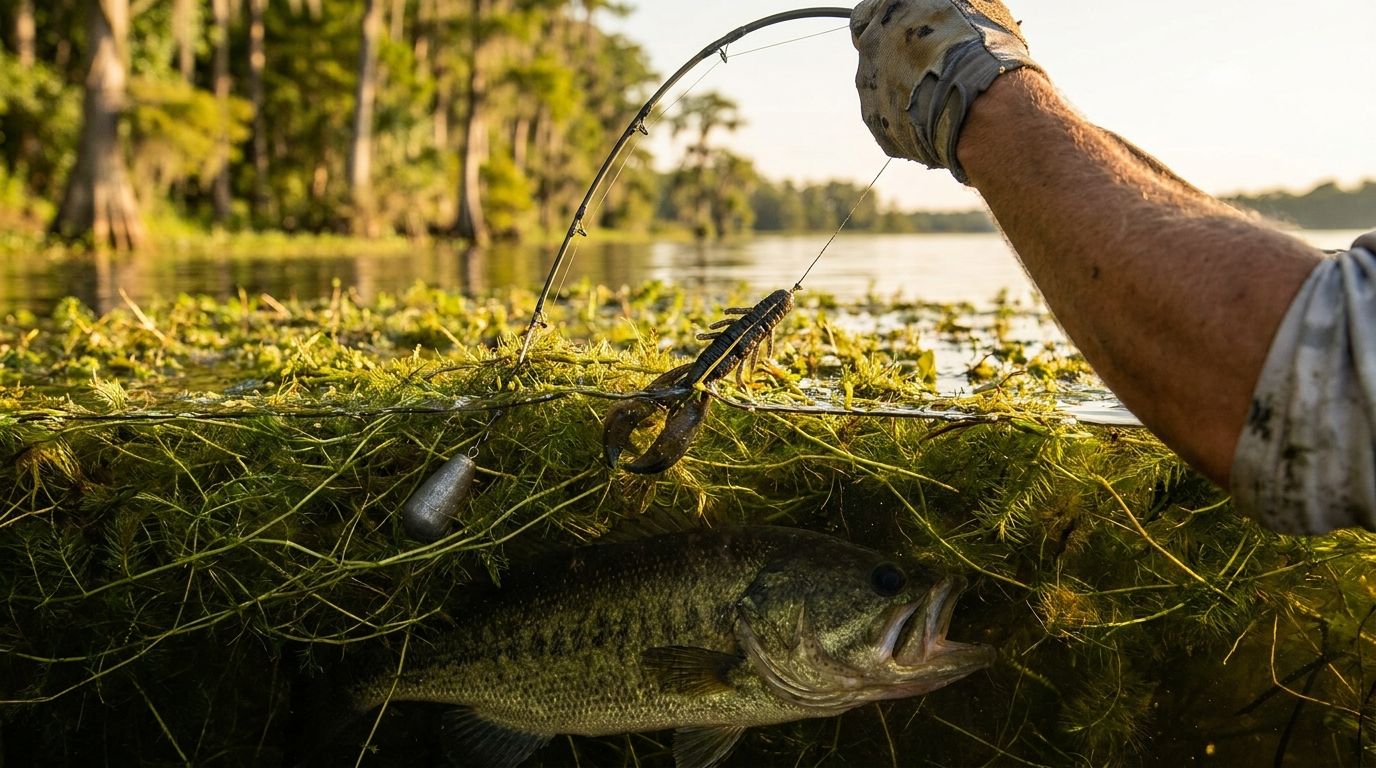
Why Bass Live Under Mats
Matted vegetation — hydrilla, milfoil, and other thick-growing aquatic plants that form a canopy at the surface — creates one of the best bass habitats in existence. Under that mat:
- Temperature is 5–10°F cooler than the surrounding water
- Oxygen levels are higher (photosynthesis from the grass below)
- Prey (shad, bluegill, frogs, snakes) fall through the surface
- Bass can ambush with zero pursuit — prey comes to them
The biggest bass in the lake are often sitting under the thickest, most inaccessible mat. They're there because it's comfortable and the food comes to them. Getting a bait to them requires a specific technique: punching.
What Punching Is
Punching is the act of driving a heavy tungsten sinker through a mat canopy using its weight alone, allowing a weedless-rigged soft plastic to fall through the hole the sinker creates and into the pocket below the mat.
The sinker creates the hole. The lure follows through. Bass that have been sitting under the mat for hours are presented with what looks like a falling creature — a frog, a shad, a crawfish — and they eat it.
The technique is simple in concept and demanding in execution. The right weight, the right rig, and the right drop are the variables.
Rigging for Punch
Sinker:
A tungsten punching sinker (not a standard bullet weight) is essential. Tungsten is denser than lead, creating more mass in a smaller, more streamlined profile that parts mat canopy without fouling.
Weights:
- 1 oz: Light mats, early spring vegetation that hasn't fully matted
- 1.5 oz: Standard summer mat thickness
- 2 oz: Extremely thick, heavily matted hydrilla or milfoil
- 2.5–3 oz: The thickest conditions — tournament fishers punching giant Guntersville mats
Match the weight to the mat. If you're pushing down and the sinker won't penetrate, go heavier. The bait must fall cleanly through to be effective.
Hook:
A heavy-duty wide-gap hook, 4/0 to 5/0, designed for punching. The hook gap must accommodate the thicker plastic baits used in this technique. Many anglers use Owner or Gamakatsu Beast or Wide Gap hooks in heavy gauge wire.
Peg the sinker:
Use a toothpick or rubber peg to fix the sinker directly against the hook eye. If the sinker slides up the line, the sinker makes the hole but the hook and bait don't follow through cleanly.
Bait selection:
Compact, dense soft plastics that fall quickly and don't tangle in the mat:
- Craw baits (2.5–3 inch compact): The Googan Krackin' Craw (/products/googan-krackin-craw) punches through cleanly and settles in a defensive posture.
- Creature baits (compact): Heavy appendages that create some movement below the mat without snagging the bottom of the mat canopy on the fall.
- Beaver-style bait: Large, dense, with paddle-style appendages. Creates a good profile in the pocket.
- Tube bait: Falls with a spiral action through the mat hole — a distinct presentation some anglers prefer.
Rod: 7'6"–8'0" heavy or extra-heavy baitcaster, fast action. You need to drive the hook through plastic and into a bass's jaw through a mat with one motion, then control a heavy fish through the mat as you pull it out.
Executing the Punch
Reading the Mat
Not all mat is equal. Target these specific features within the mat:
- Holes and pockets: Open areas within the mat where bass can see the surface. Natural ambush positions.
- Mat points: Where the mat edge protrudes toward open water. Bass use points for feeding.
- Color variations: Darker mat patches can indicate a bass under the surface pushing up slightly.
- Shade transitions: The deepest shade within the mat on sunny days concentrates fish.
Conditions That Favor Punching
- Water above 72°F (hot summer, bass seeking thermal refuge)
- High sun, minimal clouds (bass go deep under mats to avoid light)
- Post-front recovery (bass hide under mats after fronts)
- Clear, high-pressure days (mats are the deepest shade available)
The Summer Mats Frog Kit covers both punching and frog fishing for matted vegetation — the two primary techniques for fishing on top of or through the mat.
For the broader summer pattern context, see Summer Bass Pattern Preview. More punch fishing technique at Bassmaster.