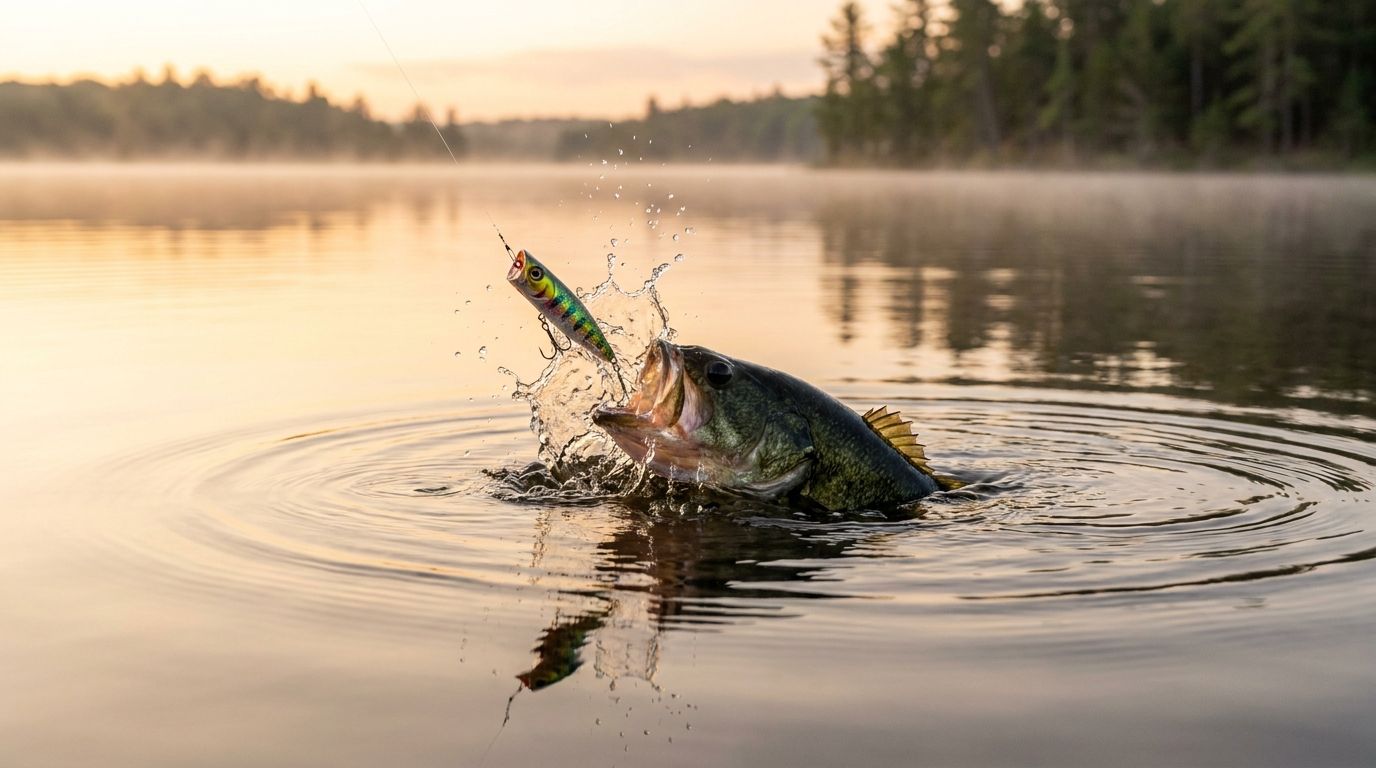
A popper gives bass a target they can study, stalk, and crush. Unlike a walking bait that keeps sliding across the surface, a popper can stay in one small zone and make repeated noise over a high-percentage spot.
Why it works
The cupped face spits and pushes water. That disturbance imitates a struggling baitfish, insect, or bluegill at the surface. The pause is often more important than the pop.
Best setup
Use a moderate rod, monofilament or braid with a mono leader, and sharp treble hooks. Bone, chrome, black, and bluegill patterns are reliable.
How to fish it
Cast near cover, let the rings fade, then pop once or twice and pause. If bass miss, stop the lure. If they are aggressive, use a faster spit-spit-pause cadence. If they are cautious, make softer bloops and longer pauses.
Where to throw it
Poppers work around docks, laydowns, grass holes, bluegill beds, shade pockets, riprap, and calm morning banks. They are especially good when bass are feeding shallow but not chasing fast.
Common mistakes
Do not overwork the bait in slick calm water. Loud popping can scare fish in clear, quiet areas. Also avoid setting the hook on sight; wait until the rod loads.
Quick checklist
- Let splash rings fade
- Pause beside cover
- Use softer pops in calm water
- Stop after missed strikes
- Sweep into the fish
Final take
A popper is about timing. Put it near cover, make just enough noise, and let the pause give the bass a clean shot.