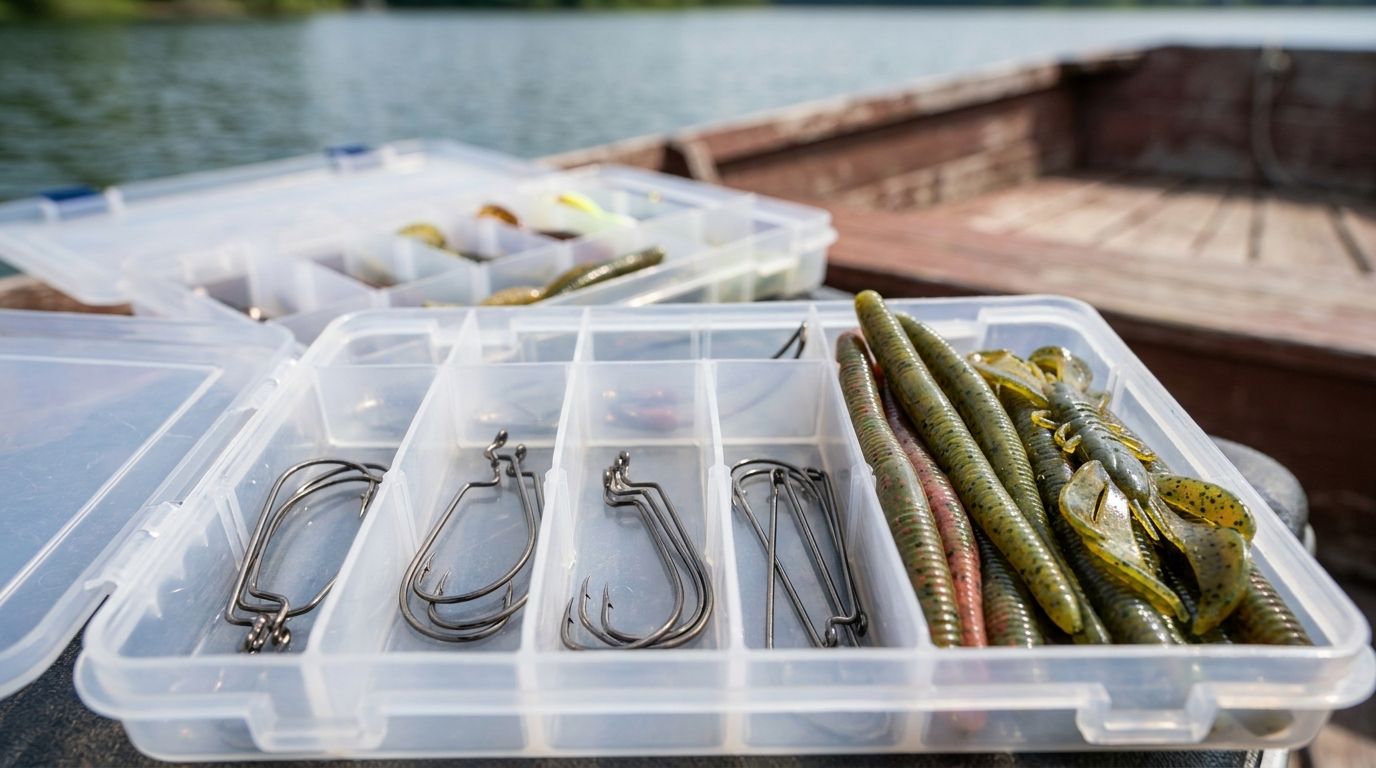
Hooks are not the exciting part of bass fishing, but they decide whether a bait runs right and whether a bite turns into a landed fish. The wrong hook can make a good lure twist, bunch up, or miss hooksets.
Why it works
Soft plastics need support and gap. A thin worm needs a different hook than a bulky creature bait. A hook that is too small limits penetration; one that is too large can kill the bait's action.
Best setup
Use straight-shank hooks for flipping and heavy cover, offset worm hooks for slimmer worms, EWG hooks for bulkier plastics, and finesse hooks for wacky rigs and drop shots.
How to fish it
Rig the bait straight and check how the point sits. For Texas rigs, bury or skin-hook the point enough to stay weedless while still allowing it to pop free on the hookset.
Where to throw it
Match hook style to cover. Open water allows exposed hooks. Grass, wood, and brush call for weedless rigging. Heavy cover requires stronger wire and stronger line.
Common mistakes
Do not assume one EWG hook fits every plastic. Also replace or sharpen hooks after rock, wood, or several fish. A slightly dull hook costs bites.
Quick checklist
- Match hook gap to bait thickness
- Rig straight
- Use stronger hooks in heavy cover
- Skin-hook for weedlessness
- Check sharpness often
Final take
A hook is small, but it controls the whole presentation. Match it to the bait and cover before blaming the lure.