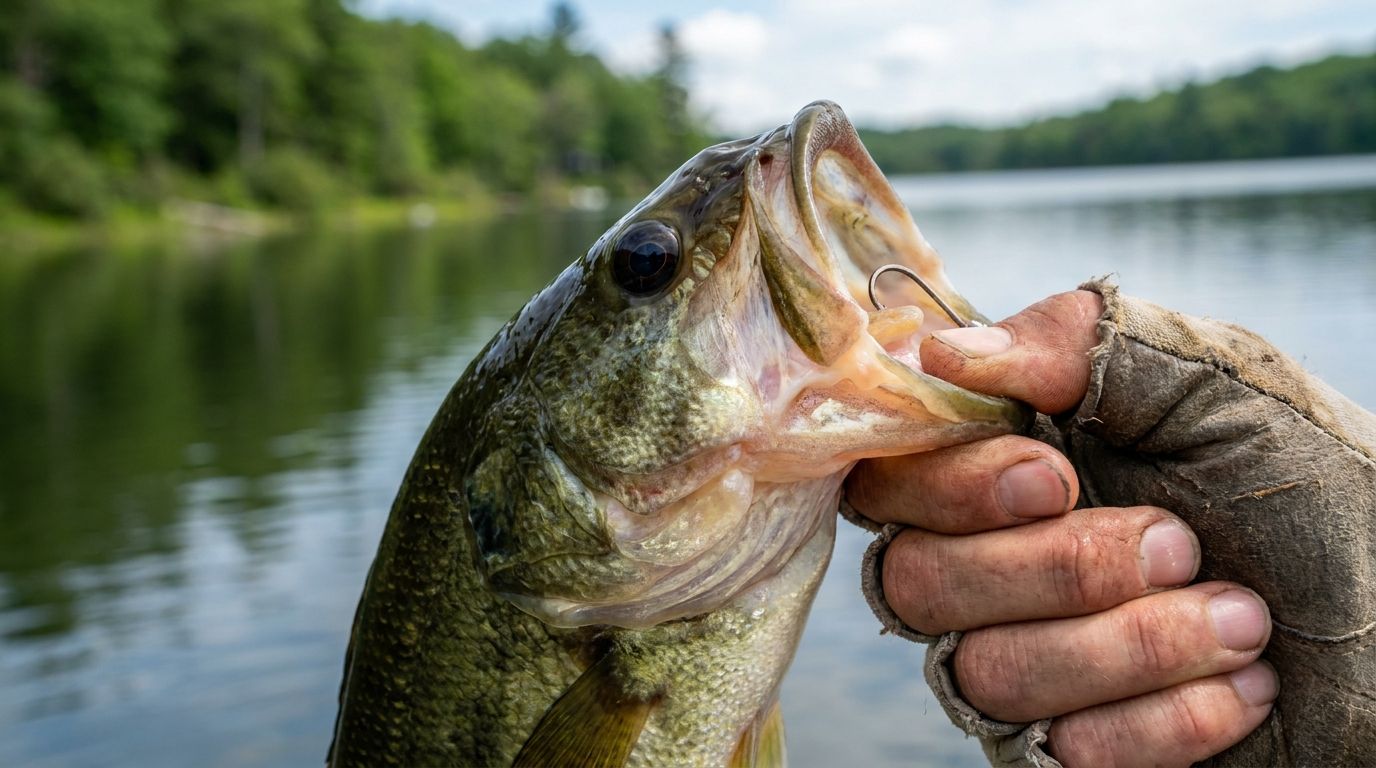
Bass have big mouths, but that does not mean every bite needs a violent hookset. Hookset timing depends on the lure, hook style, line, cover, and how the fish eats.
Why it works
Single-hook baits need penetration. Treble-hook baits need pressure. Frogs need patience. Finesse rigs need control. Matching the hookset to the bait lands more fish than swinging as hard as possible every time.
Best setup
Use strong hooksets with Texas rigs, jigs, and frogs. Use sweeping pressure with crankbaits, jerkbaits, and topwaters with trebles. Use quick reel-down pressure with small finesse hooks.
How to fish it
When you feel a bite on a single hook, reel down until the rod starts to load, then drive the hook. With treble hooks, keep the rod bent and avoid slack. With frogs, wait until the fish has the bait.
Where to throw it
Heavy cover requires faster control after the hookset. Open water lets you fight fish more patiently. Around docks, grass, or wood, turn the fish before it reaches danger.
Common mistakes
Do not set on every splash, and do not give slack after the hookset. Also avoid using a rod so stiff that it tears out treble hooks.
Quick checklist
- Match hookset to hook type
- Reel down first
- Sweep with trebles
- Wait on frog bites
- Keep pressure steady
Final take
A good hookset is controlled, not angry. Read the bite, load the rod, and use the hookset the lure actually needs.