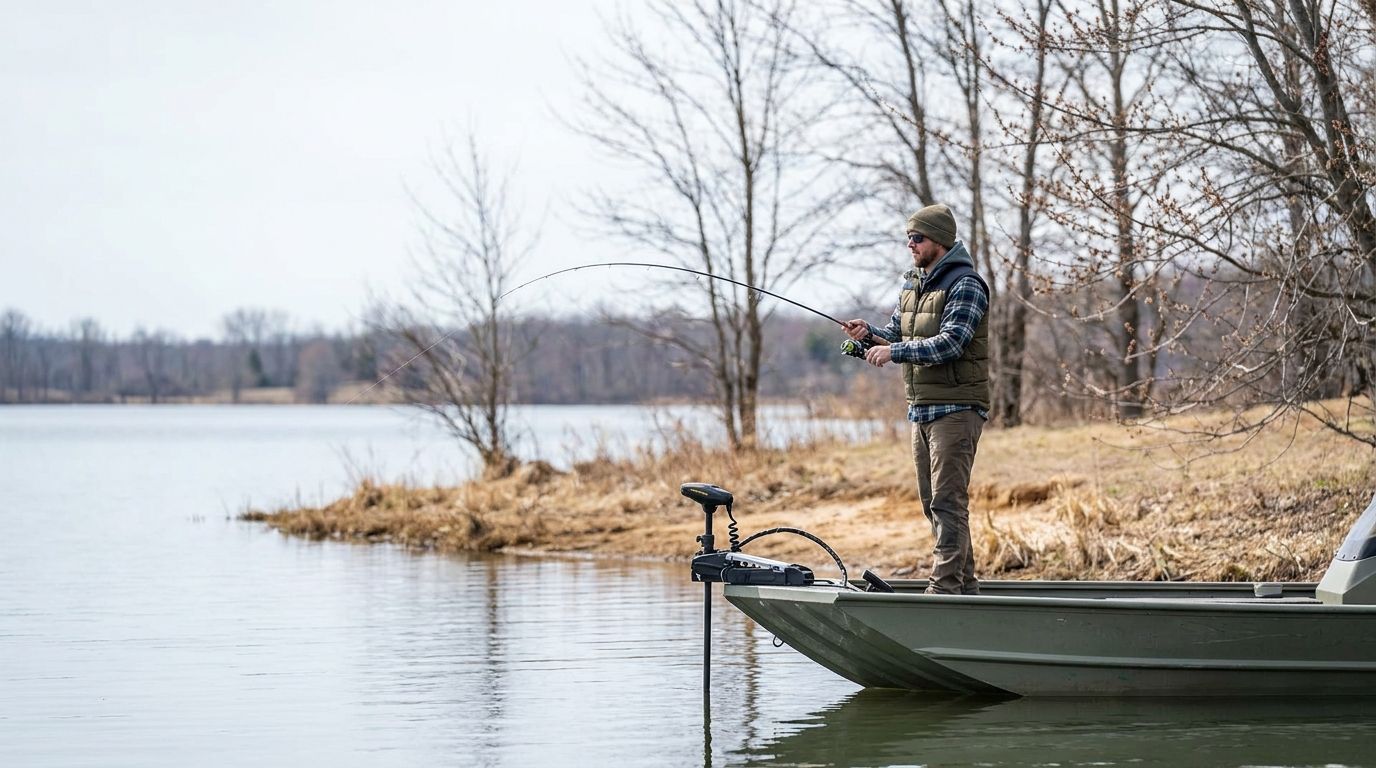
What Triggers the Pre-Spawn
Pre-spawn isn't triggered by calendar date — it's triggered by water temperature. Bass begin moving from winter holding areas toward spawning flats when water temperature consistently reaches the mid-40s to low 50s. On most bodies of water, they begin actively staging in the 52°F–58°F range. By 60°F–62°F, the spawn itself is beginning for early fish.
Day length (photoperiod) also plays a role. As days lengthen, hormonal changes begin preparing bass for reproduction even before water hits the trigger temperature. This is why you can see pre-spawn behavior in February in the deep south when water is still 48°F, while fish in northern states don't begin staging until April at the earliest.
General pre-spawn timing by latitude:
| Region | Pre-Spawn Window |
|--------|-----------------|
| Deep South (FL, GA, AL, MS) | January–March |
| Mid-South (TN, KY, AR, TX, OK) | February–April |
| Central (MO, IL, IN, OH) | March–May |
| Northern (MI, WI, MN, NY, PA) | April–June |
These are ranges, not rules. An unusually warm February can push mid-south fish into pre-spawn three weeks early. A cold April can delay northern fish into May.
The Three Phases of Pre-Spawn
Pre-spawn isn't one moment — it's a gradual progression that plays out over several weeks. Understanding the phases helps you match the right technique to where fish actually are in the process.
Phase 1: First Movement (48°F–52°F)
Fish begin stirring from their deepest winter haunts. They don't commit to shallow water yet, but they're on the move — from 35 feet to 25 feet, from secondary points to primary points, from creek channels to the mouths of spawning coves.
What's happening: Bass are following the first significant warming trend. A three-day run of warm weather in late winter pulls fish out of winter lethargy. They're not feeding heavily yet, but they're more active than they were.
How to catch them: Suspending jerkbait in 8–18 feet, slow-rolled swimbaits along structure transitions, finesse jigs at 20–28 feet on main-lake points. The bite is still slow; presentations need patience. See Suspending Jerkbait Mastery for technique detail.
Phase 2: Staging (52°F–58°F)
Bass are now positioned in staging areas — secondary points inside coves, creek channel bends, submerged flats adjacent to spawning banks. They're eating significantly more, building energy reserves for the spawn. This is the peak pre-spawn feeding window.
What's happening: Competition for staging locations concentrates fish. A single point inside a spawning cove may hold dozens of bass. They're aggressive because they're feeding actively.
How to catch them: This is prime time for mid-depth crankbaits, jigs, swimbaits, and even topwater on calm, warm mornings. Presentations can be faster. Fish cover more aggressively. The full picture at Finding Pre-Spawn Staging Areas.
Phase 3: Pre-Spawn Peak (58°F–62°F)
Bass are the closest to shallow they'll be before actually spawning. The biggest females are often just off the spawning flats — holding in 4–8 feet while males scout beds.
What's happening: Feeding is at maximum intensity. The biggest fish of the season are accessible in relatively shallow water, and they're aggressive. This is the window most experienced anglers plan their best trips around.
How to catch them: Jigs, Texas-rigged plastics, swimbaits, crankbaits in the 4–10 foot range. The fish are not subtle. Work the transition between deeper staging areas and the shallow spawning flats.
How Cold Fronts Affect the Timeline
A cold front can temporarily reverse pre-spawn progress. A 15-degree temperature drop will push staging bass back to their previous winter holding areas for a day or two. When conditions stabilize and temperatures rebound, they move back.
This back-and-forth happens multiple times throughout the pre-spawn window in most regions. Anglers who know the staging areas can find fish after a setback — they've just moved back slightly on the same structural route.
Water Color and Spawning Habitat
Pre-spawn timing is also affected by lake type. Lakes with dark-bottomed, stained water warm faster than clear highland reservoirs. Pre-spawn in a Georgia red-clay lake may begin three weeks earlier than a clear Tennessee highland impoundment at the same latitude.
For how lake type affects overall forage and behavior patterns, Best Bass Forage by Lake Type provides the broader context.
Planning Ahead
The anglers who consistently catch pre-spawn bass are the ones who've done the homework before water hits the trigger temperature:
- Mapped the spawning coves on their primary water
- Identified the staging structure adjacent to those coves
- Assembled the right presentations (see Prespawn Craw Kit for a complete system)
- Watched the 10-day temperature forecast
Use the Seasonal Fishing Calendar to track when pre-spawn typically occurs on your home water and plan your peak trips around the staging phase — it's the most productive window of the year.
More on pre-spawn bass behavior at Bassmaster and Wired2Fish.