The Debate
Ask ten experienced bass anglers whether the moon affects fishing, and you'll get ten different answers. Some swear by solunar tables. Others dismiss lunar influence entirely and attribute their good and bad days to variables they can measure — water temperature, weather pressure, season, forage availability.
Both camps have a point. The truth is more nuanced than either position.
What the Science Says
Lunar influence on fish is real — the mechanisms are just less dramatic than solunar tables suggest.
Tidal influence: In coastal systems, the moon drives tides, and tides drive fish movement in saltwater. This is well established. Freshwater systems don't have tides, which immediately reduces the moon's direct mechanical influence on inland bass.
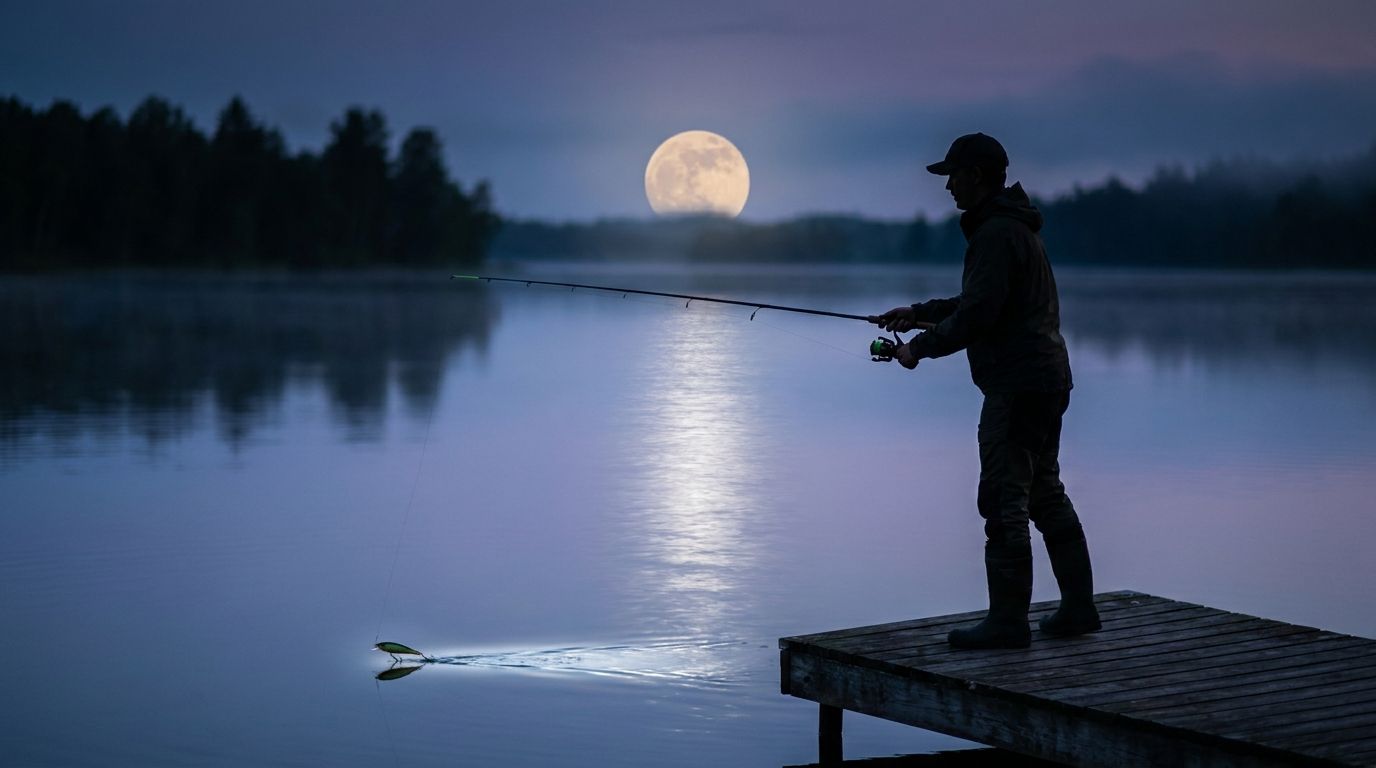
Light influence: The full moon illuminates shallow water at night. Bass are visual predators with excellent low-light vision. A full moon night is essentially a long, soft dusk — extended feeding opportunity in shallow water that wouldn't otherwise be fishable at night. Night fishing during full moons is more productive than during new moon darkness. This effect is real and worth planning around.
Spawning trigger: Bass spawn is influenced by water temperature, but photoperiod (day length and light intensity) appears to be a secondary trigger. Some research suggests full moons correlate with peak spawning activity within a spawning season. This is anecdotally supported by guides who see the biggest spawning concentrations around full moons in spring.
Barometric pressure: This is where the moon connection gets tenuous. The moon affects atmospheric tide (very slight atmospheric pressure variation), but the effect is small compared to storm systems and fronts. Bass respond to barometric changes, but attributing this to the moon specifically is a stretch.
What Experienced Anglers Observe
The most credible field observations from guides who fish hundreds of days per year:
Full moon nights produce. Night fishing under a full moon — particularly in summer — consistently outperforms new-moon nights. The extended light window activates bass in shallow water for longer periods.
Major solunar periods sometimes correlate with bites. Not always. Not precisely. But experienced anglers often note that the mid-morning major period, in particular, coincides with a reliable bite — which may be independent of moon phase and simply be the natural mid-morning feeding pattern that coincides with those periods.
Spawn timing clusters around full moons. Guides on Florida natural lakes note that the full moons in February, March, and April predictably push fish onto beds in waves. Bass spawn in pulses, and those pulses appear moon-linked.
Day-to-day variation doesn't track cleanly. If you compare the same angler's catch logs against solunar tables without knowing which days were which, the correlation is weaker than the tables imply. Seasonal patterns, water temperature, weather, and structure matter more for day-to-day success.
Practical Applications
Night fishing: Plan summer night trips around the full moon. The extra light makes both fishing more effective and navigation safer. The bite in shallow grass and on rip-rap during full-moon nights can be exceptional.
Spring spawn trips: If you're planning a long-distance spring trip to catch bass on beds, the full moon in your target month is a statistically more likely time for fish to be actively spawning. Not guaranteed, but worth noting.
Don't cancel based on lunar phase. Bad solunar days have produced memorable fish. Good solunar days have been complete blanks. If water temperature is right, weather is stable, and you're on good structure, go fish. The moon is one factor among many, not the determining one.
Trust what you observe, not what you predict. Fish the actual conditions in front of you. If bass are feeding, fish. If they're lockjawed, adjust your technique and location before blaming the moon.
Solunar Tables: How to Use Them
Solunar tables predict four feeding periods per day — two "major" (approximately 45–90 minutes each, at moon rise and moon set) and two "minor" (approximately 30–45 minutes each, at moon overhead and underfoot).
If you're going to use them:
- Focus on the major periods, not the minor ones
- Cross-reference with weather stability — a solunar major period after a severe cold front is not a reliable predictor
- Note when your actual bites happen relative to the table and adjust based on your observations over time
- Don't leave productive fish in search of a better solunar period elsewhere
The Bottom Line
The moon influences bass fishing in specific, demonstrable ways:
Use lunar information as a minor planning variable, not a major one. Plan trips around stable weather, appropriate seasonal timing, and good water conditions. If the full moon aligns, great.
For the seasonal patterns that actually drive bass location and behavior, see Seasonal Forage Guide for Bass and the Seasonal Fishing Calendar. For understanding the variables that matter most day to day, the Fish Finder helps match lures to the conditions that are actually present.
Solunar science and fishing timing at In-Fisherman — they've published some of the most balanced analysis of lunar influence on freshwater fish available.