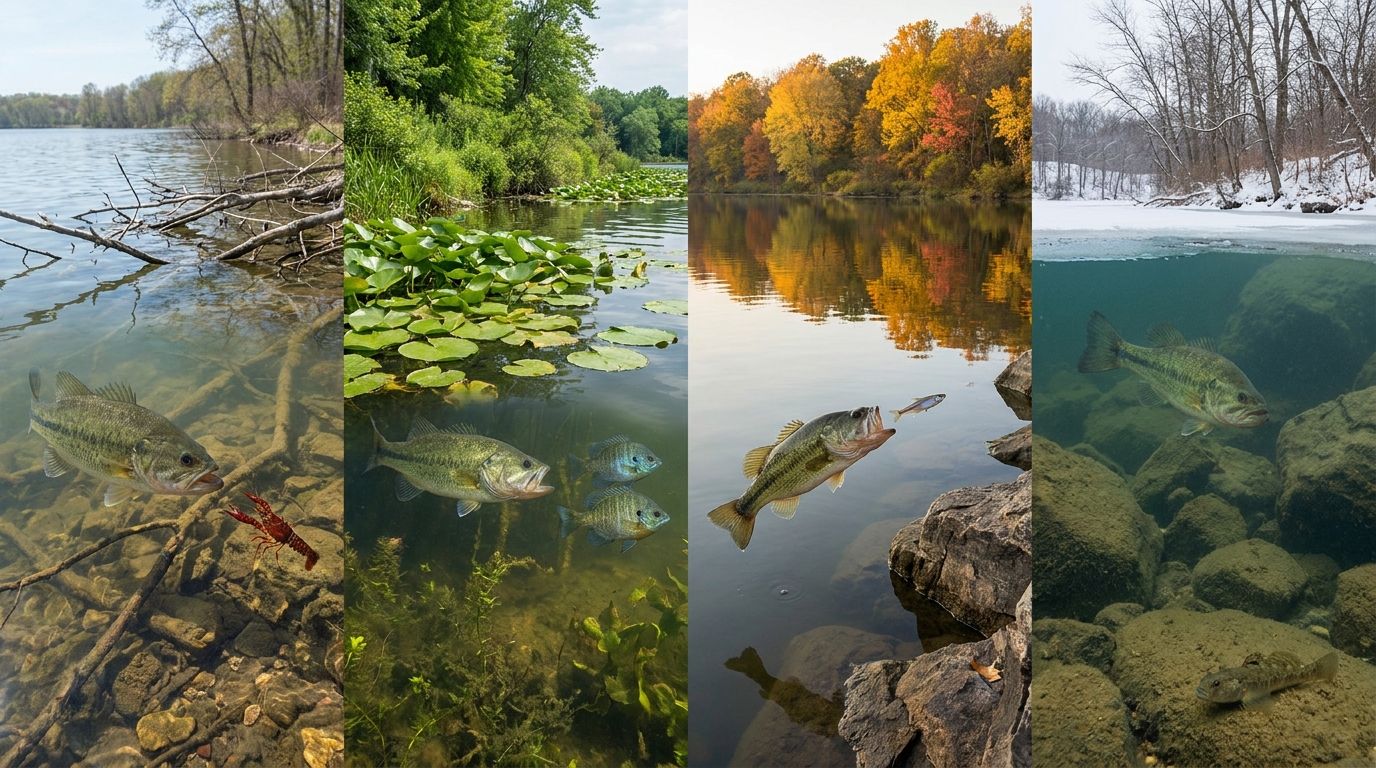
Why Forage Matters More Than Technique
Bass are opportunistic predators, but they're not random. At any given point in the year, they key in on whatever forage is most abundant, most vulnerable, and most calorie-dense for the energy required to catch it.
Understanding the seasonal forage calendar is the single highest-leverage skill improvement an angler can make. It's not about learning a new cast or upgrading your rod — it's about showing up on the water with the right lure already tied on before you make your first cast.
Prespawn: Crawfish Dominate
When water temperatures climb from the low 50s into the mid-50s, bass shift from winter lethargic mode into feeding mode. Their primary target in most bodies of water is crawfish.
Crawfish are active on rocky banks, gravel transitions, rip-rap, and chunk rock areas that warm faster than muddy or silty bottoms. Prespawn bass will be feeding heavily to build energy reserves for the spawn.
Best lures: Craw jigs in natural brown/orange/green colors, hard-bodied crankbaits with crawfish patterns, creature baits on a Texas rig.
Where to fish: Points, transitions from hard bottom to soft bottom, rip-rap banks, chunk rock banks along secondary creeks.
Spawn: Bluegill and Crawfish Trigger Defensive Strikes
During the spawn, bass aren't primarily feeding — they're protecting beds. But they will strike anything that intrudes on or near the nest.
Bluegill are major nest predators. Bass on beds will hit bluegill-colored baits instinctively. Crawfish are opportunistic nest raiders as well.
Best lures: Bluegill-colored swimbaits, soft plastics in natural bluegill colors, compact craw jigs.
Where to fish: Spawning flats in 1–6 feet of water. Sandy bottoms, gravel, or sparse grass near transition areas.
Post-Spawn: The Bluegill Season Begins
Post-spawn is arguably the most fun period of the year. Bass are hungry after the spawn and bluegill are now actively moving into the shallows to spawn themselves — making them easy targets.
Bass will stack up near bluegill spawning areas, picking off easy meals.
Best lures: Bluegill-pattern swimbaits, topwater prop baits (the Whopper Plopper 90 in bluegill is iconic for this), swim jigs.
Where to fish: Docks, shallow flats, emerging weed edges, anywhere you can see bluegill beds.
Summer: Shad in Deep Water, Frogs in Shallow Cover
Summer splits bass into two distinct groups depending on the body of water:
Deep fish (primarily reservoirs) follow shad schools down to main-lake ledges and channel swings at 15–25 feet. These fish are best targeted with deep-diving crankbaits.
Shallow fish key on bluegill near dock shade and vegetation, and become increasingly active on frogs and topwater as vegetation matures.
Best lures: 300DD and 500DD deep divers, bluegill-colored swimbaits, hollow-body frogs over mats.
Fall Transition: Shad Explosion
Fall is feeding frenzy season. Cooling water triggers massive shad migrations from deep summer areas into the shallows. Bass follow, and the bite becomes aggressive and easy to trigger.
Lipless cranks, jerkbaits, and shallow crankbaits in shad colors dominate this pattern.
Best lures: Red Eye Shad, Provoke 106X jerkbait, Cloud 9 C10 in shad colors.
Where to fish: Secondary creek arms, shallow flats, points, anywhere shad are visibly present.
Winter: Slow It Down with Shad and Craw
Winter bass are sluggish but they do feed, especially on warm afternoons and near baitfish concentrations.
Jerkbaits with long pauses and finesse craw presentations on Ned rigs are the primary winter tools.
Best lures: Jerkbaits (Provoke 106X), finesse craw (Z-Man TRD CrawZ), deep jigs on warm days.
The Bottom Line
Matching the forage isn't complicated — it's just consistent. Use the forage calendar, pay attention to what phase you're in, and let that drive your lure selection before you start making adjustments.
Use the Lure Recommender to get a custom recommendation for your date, region, and waterbody.