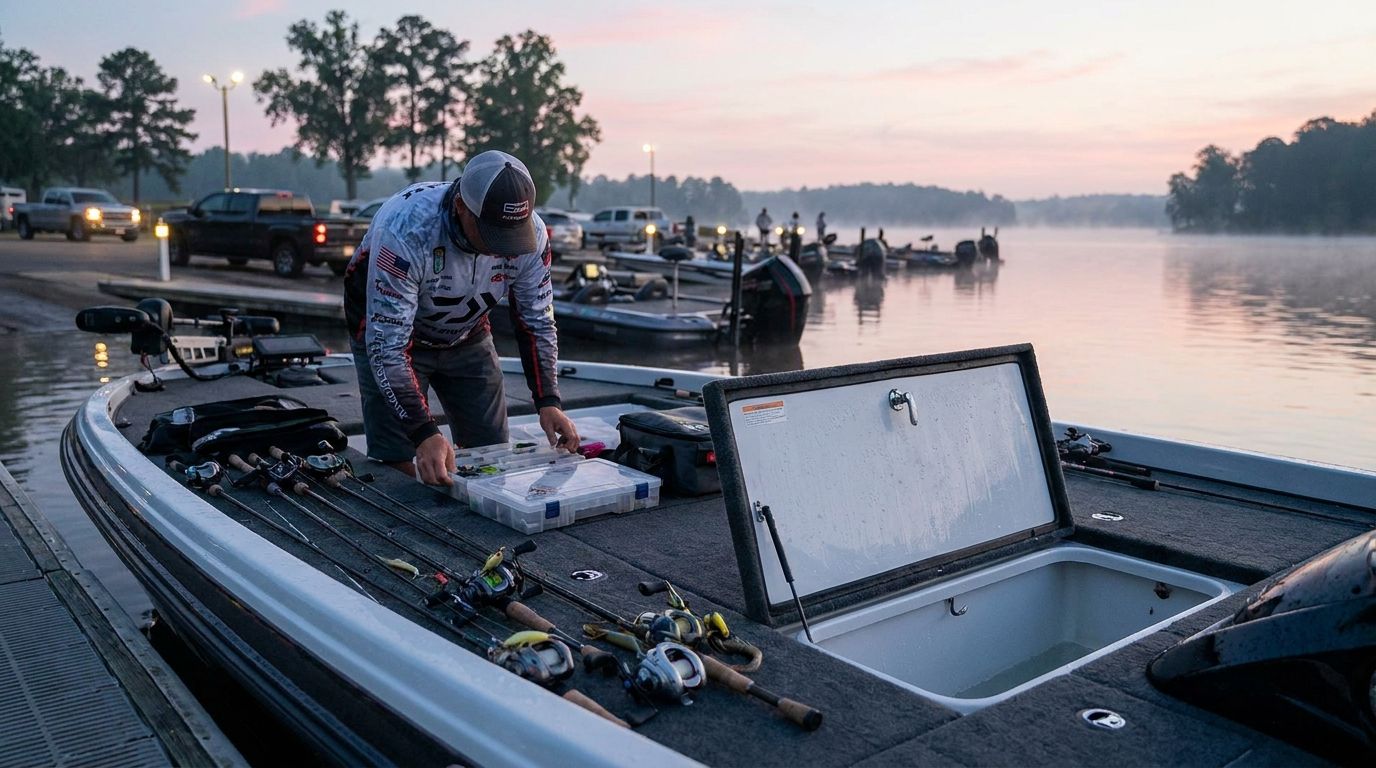
The Pre-Tournament Mindset
Tournament fishing is fundamentally different from recreational fishing. You have a finite window — usually one day, six to eight hours — to produce a limit of quality fish on an unknown or partially-known body of water, under pressure, against hundreds of other anglers often targeting the same fish.
The difference between consistently placing well and consistently mid-packing isn't luck. It's preparation.
Scouting Before Practice
Before you launch the boat for official practice, do your homework from shore.
Lake maps: Download or purchase a high-quality contour map of the tournament lake. Study it before your first practice day. Identify: spawning coves (protected, south-facing, shallow with firm bottom), staging structure (secondary points, channel bends adjacent to coves), and main-lake structure (points, humps, ledges at 15–30 feet).
Mark five or more potential patterns before you launch. Practice confirms or eliminates — it doesn't replace pre-tournament analysis.
Tournament results: Search for previous tournament results on the same lake at the same time of year. Catch patterns ("mostly shallow coves," "fish came off ledges") give you directional information about where fish historically have been.
Guide reports and fishing reports: Local guides often post recent reports. Wired2Fish (wired2fish.com) and similar publications run lake reports that reference recent patterns and water conditions.
Forage inventory: Know what the lake holds. A shad-dominated reservoir calls for different preparation than a lake heavy with bluegill and crawfish. See Best Bass Forage by Lake Type and the Fish Finder tool for help matching lures to forage.
Structuring Practice
One or two days of official practice is common in local tournament circuits. How you spend that time determines your tournament finish.
Day 1: Search broadly. Cover as much water as possible. Don't fish one spot thoroughly — evaluate potential. Mark waypoints on every promising location. The goal is to identify which of your pre-tournament patterns holds fish.
Day 2: Verify and prioritize. Return to the best spots from Day 1. Fish them more thoroughly, assess fish quality and quantity, and note how the fish are positioned. Identify your primary plan, backup plan, and emergency plan.
Don't high-stick: Leave your best spots alone when you find them. Fishing a location repeatedly in practice depletes it. Once you know fish are there, leave. Come back tournament day.
Building the Three-Plan System
No experienced tournament angler goes into tournament day with a single plan. Conditions change overnight. A thunderstorm raises the water 2 feet. A cold front drops water temperature 8 degrees. Other anglers are already on your primary location.
Plan A: Your best confidence pattern, on your best-quality water, with your best-confidence techniques. Designed for normal conditions.
Plan B: A different pattern or different water that you can pivot to if Plan A is unproductive. Often a technique adjustment (finesse vs. power) or a depth change.
Plan C: The emergency plan. Usually a numbers approach — a pattern that catches fish but not the biggest fish. Saves a limit when nothing else is working.
Adapting to Spring Conditions in Tournament
Spring conditions change rapidly. A practice day in 58°F water may be followed by a tournament day in 62°F water after three warm days — completely different phase.
If water warmed since practice: Fish moved shallower than where you found them. Spawn-phase approaches may now be valid. Check the same coves but look for fish in 2–4 feet instead of 8–12 feet.
If a cold front hit: Fish moved deeper. Add finesse presentations to every location. Fish slower. The staging areas from pre-spawn become relevant again.
If a significant rain raised the lake: New shoreline cover is activated. Flooded brush and bankside vegetation hold bass that weren't accessible before the rain. Look for isolated new cover in protected areas.
Tackle Preparation
The morning of the tournament is not when you should be rigging rods. The night before:
- Pre-rig all rods for your anticipated presentations (typically 4–7 rods)
- Check line and retie knots — fresh fluorocarbon where needed
- Organize tackle by pattern, not by lure type
- Charge all electronics and trolling motor batteries
- Set up your waypoints and mark any coordinates from practice
For spring tournament presentations, the Prespawn Craw Kit and Seasonal Starter Pack give you tournament-ready lure selections for the most common spring patterns without redundancy.
Mental Game
Tournament fishing is mentally taxing. You'll have periods where your plan isn't working. How you respond to those periods separates consistently good anglers from anglers who have good days occasionally.
Rules:
More tournament prep strategy from touring pros at Bassmaster — their annual tournament preview content is among the best available. The Seasonal Fishing Calendar helps you anticipate where the spring pattern will be on tournament day based on water temperature trajectory.