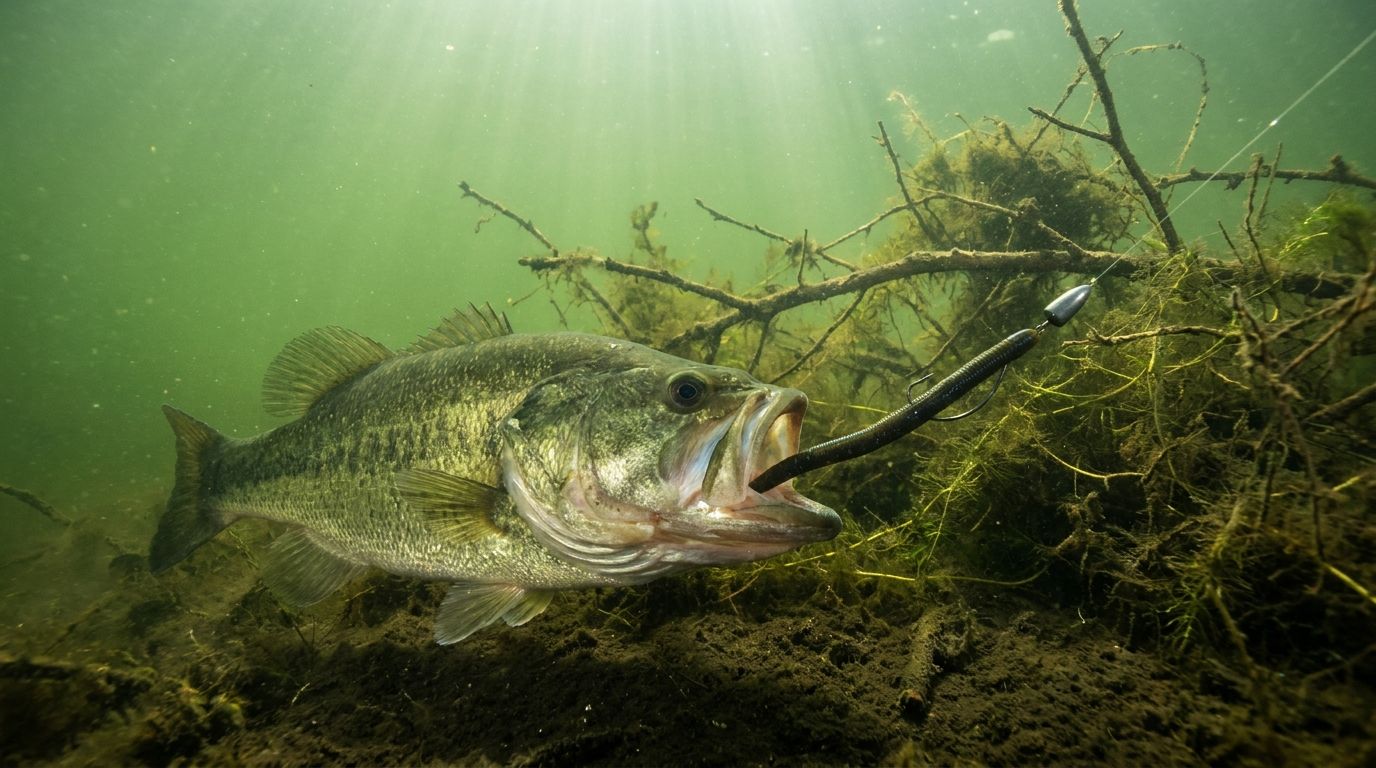
The Texas rig keeps catching bass because it solves a real problem: bass live around snaggy stuff. A soft plastic worm rigged weedless can slide through grass, limbs, brush, dock posts, and pond weeds without hanging up every cast.
Why it works
The bait looks natural on the fall and stays close to cover. Bass do not have to chase it far, and you can fish places where exposed hooks fail. That makes it useful for beginners and tournament anglers alike.
Best setup
Use an offset worm hook or extra-wide-gap hook, a bullet weight, and a straight or ribbon-tail worm. Peg the weight in heavy cover and leave it unpegged when you want a freer, more gliding fall. Green pumpkin, black-blue, and watermelon are safe starting colors.
How to fish it
Cast past the target, let the bait fall on semi-slack line, and watch for jumps or sideways movement. After it hits bottom, lift gently, pause, and drag. Most bites feel like a tick, pressure, or the line moving before you feel anything in the rod.
Where to throw it
Fish it along grass edges, laydowns, brush piles, dock shade, stumps, shallow points, and pond weedlines. It is also excellent after a cold front when bass stop chasing faster lures.
Common mistakes
Do not jerk at every bump. Learn the difference between wood, grass, rock, and a bite. Also avoid burying the hook so deep that it cannot come through the plastic on the hookset.
Quick checklist
- Rig straight
- Watch the line
- Use enough weight to feel bottom
- Pause longer in cold fronts
- Set the hook hard after pressure loads
Final take
A Texas rig is not fancy, but it is dependable. When you need one bait that can get into cover and still look natural, start here.