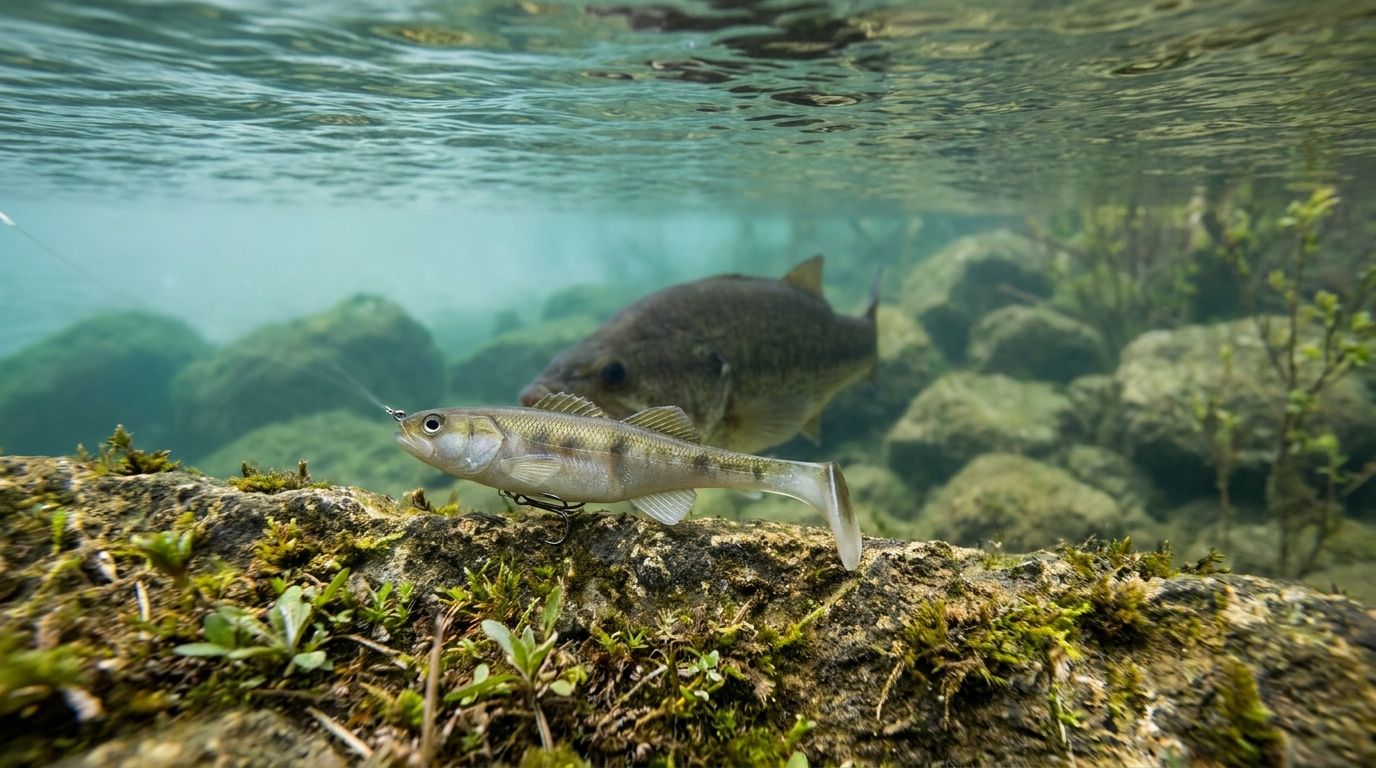
The Selective Nature of Swimbait Fishing
Swimbaits don't catch numbers. They catch big fish.
The logic is straightforward: a 4–6 inch swimbait represents a significant caloric investment for a small bass. It's simply too big relative to the fish to be worth the effort. But a 5-pound pre-spawn female — loaded with eggs and feeding aggressively to sustain herself — sees a swimbait as a meaningful meal. The big-bait-big-fish equation is real.
Pre-spawn is the best time of year to test this theory. Large females are in accessible depths (8–20 feet), they're feeding, and they're aggressive enough to commit to a larger profile.
Why Pre-Spawn Is Prime Swimbait Time
Three conditions align during pre-spawn to make swimbaits productive:
1. Big females are shallow. The largest bass in a system are at their maximum spawning weight in February and March. They're not buried in 40 feet — they're staging at 10–18 feet, within reach.
2. They're eating. Pre-spawn females are in peak feeding mode, building energy reserves. A 6-inch swimbait represents an efficient energy acquisition.
3. Shad are present in staging areas. On most reservoirs, the winter shad kill has thinned the baitfish population, and the remaining shad are in staging-depth zones. A swimbait matching a healthy shad is a legitimate threat to bass who have been eating dying shad all winter.
Swimbait Sizes for Pre-Spawn
3–4 inch (1/4 to 3/8 oz): The entry point. Large enough to appeal to quality fish; small enough to still catch mid-size bass. Paddle-tail swimbaits in this range work as slow-roll lures alongside points and over flats. The Berkley PowerBait Swim Shad HD Bluegill (/products/berkley-swim-shad-bluegill) in this size range is a proven producer.
4–5 inch (3/8 to 5/8 oz): The middle range. Targets good-quality fish while remaining fishable on standard spinning or lighter baitcast gear. Covers the most productive pre-spawn depth range well.
5–7 inch (3/4 to 1.5 oz): The trophy range. Fewer bites but higher average size. Requires heavier gear — 7'6"–8'0" rod, 17–20 lb fluorocarbon or 40–50 lb braid. This is where anglers fish days without a bite and then land a 7-pound bass.
8–10 inch (2+ oz): Tournament big-fish specialization. Not a general approach. Worth fishing if you have electronics-located large fish and are willing to sacrifice numbers for maximum size.
Rigging Options
Paddle-tail on a jig head: The most versatile pre-spawn swimbait setup. Choose the head weight based on depth (1/4 oz for 8–12 feet, 3/8 oz for 12–18 feet, 1/2+ oz for deeper). The exposed hook gives better hookup ratios on surface strikes.
Paddle-tail on underspin: An underspin jig head with a small blade attached provides additional flash and vibration. Effective on staging points and ledges where flash from feeding baitfish is an attractant.
Glide bait / hard swimbait: The Bluegill Hard Swimbait (/products/bluegill-hard-swimbait) and similar jointed hard swimbaits are for targeting specific large fish. They swim with a realistic side-to-side glide and appeal to bass that want a larger profile. Fished slow-rolled or with a kill-and-glide retrieve where the bait suspends briefly.
Hollow-body swimbait: Most effective around grass and wood cover in the pre-spawn. Weedless design allows fishing in places paddle-tails snag.
The Retrieve
Slow roll: The foundational swimbait retrieve in pre-spawn. Reel just fast enough to keep the tail kicking. The bait should barely be moving but the tail should have a pronounced wobble. This is slower than most anglers fish it — count to 3 between each turn of the reel handle if needed to establish the right pace.
Kill and glide (hard swimbaits): Reel at moderate speed to load the bait with energy, then stop reeling. The bait glides and slowly sinks or rises depending on buoyancy. The kill is the trigger — big bass hit during the pause.
Bottom drag: A paddle-tail swimbait on a heavier head dragged slowly along hard-bottom staging areas mimics a wounded shad or small bluegill. Surprisingly effective on rocky staging points in the 10–18 foot range.
Color and Forage Matching
Match the primary bait fish in your lake:
- Shad-dominant lakes: Chrome/silver, pearl, natural shad colors
- Lakes with large bluegill populations: Natural bluegill, green/orange, perch (the bluegill coloration on many swimbaits also reads as a perch)
- Crawfish: Brown/craw for bottom-drag techniques
For how to choose between shad and bluegill swimbait patterns based on your lake type, see Bluegill vs Shad: When to Choose.
Patience and Commitment
Swimbait fishing requires a different relationship with slow days. You can make 200 casts and not feel a bite, then have a 6-pound bass inhale your bait on cast 201. The anglers who succeed at it don't measure the day in total bites — they measure it in quality of opportunity.
If trophy pre-spawn bass are the goal, the Seasonal Starter Pack includes the swimbait components alongside technique-appropriate options for days when you need to supplement numbers.
Swimbait fishing depth coverage at Wired2Fish — some of the best swimbait content in the industry.