Current Positions River Bass
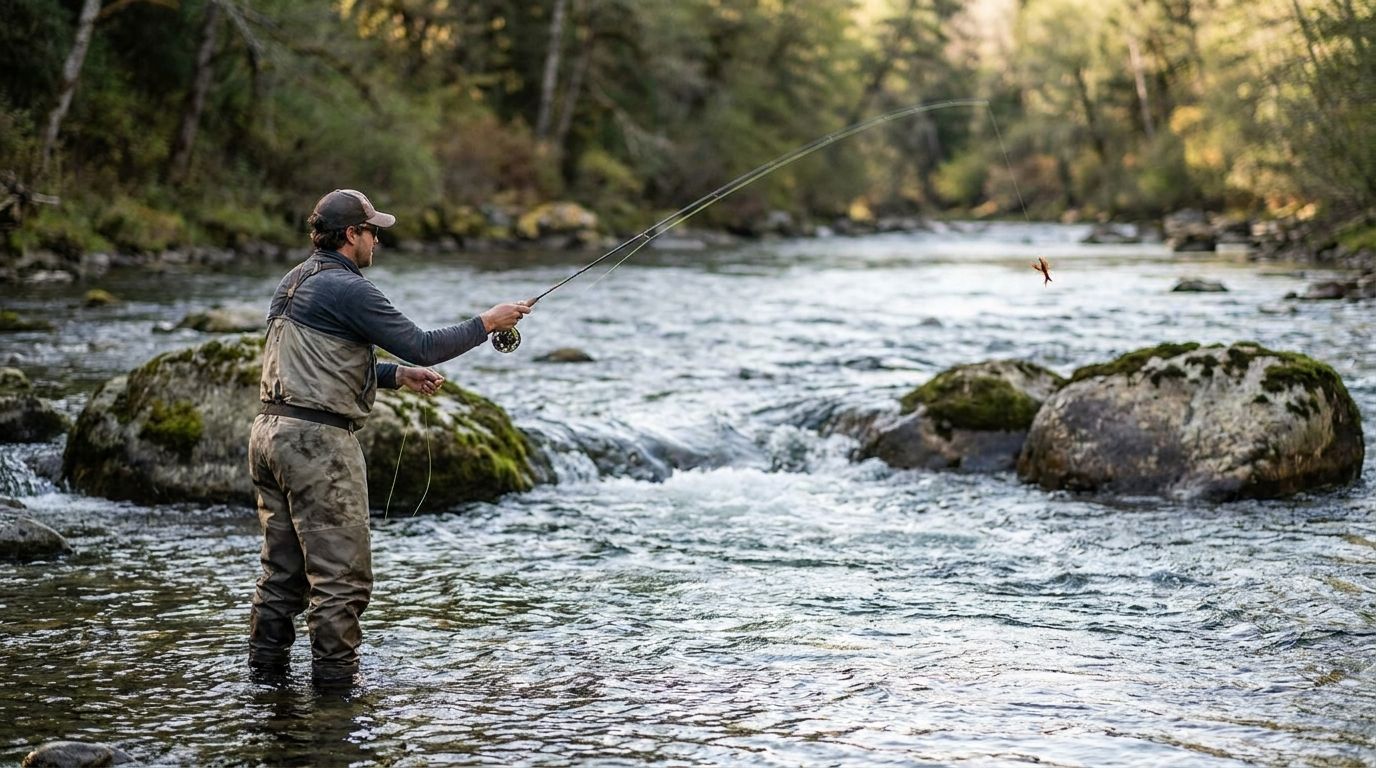
In rivers, current is the main structure. Bass use current breaks to rest while watching food drift past. That food may be crawfish, minnows, shad, insects, or small sunfish depending on the river.
The best river spots often look small: one boulder, one laydown, one eddy behind a point, or one seam where fast and slow water meet.
Where to Cast
Target the soft side of current seams, behind rocks, downstream of logs, inside bends, and the heads of pools. Cast upstream or across current so your lure moves naturally with the flow.
If a lure swings too fast, use a heavier bait or change your angle. If it hangs constantly, go lighter or choose a more snag-resistant rig.
Best River Lures
A small jig, tube, Ned rig, squarebill, spinnerbait, and compact swimbait all belong in a river box. Craw colors are excellent around rock. Shad or minnow colors are better in larger rivers with baitfish schools.
For craw-based river fishing, browse the crawdad page or the rock bank craw kit.
Reading Water Quickly
| Feature | Why Bass Use It |
|-------|-------|
| Eddy | Resting water near food |
| Boulder | Current break and ambush point |
| Laydown | Shade and protection |
| Seam | Feeding lane |
| Pool head | Oxygen and drifting forage |
Common Mistake
Do not stand where you should fish. Bank anglers often walk onto the best shallow current seam before casting. Approach quietly and fish the near water first.
Final Tip
River bass are usually more current-oriented than depth-oriented. Find the easiest feeding position and put your lure where food would naturally travel.
For river flow data before a trip, check USGS Water Data.