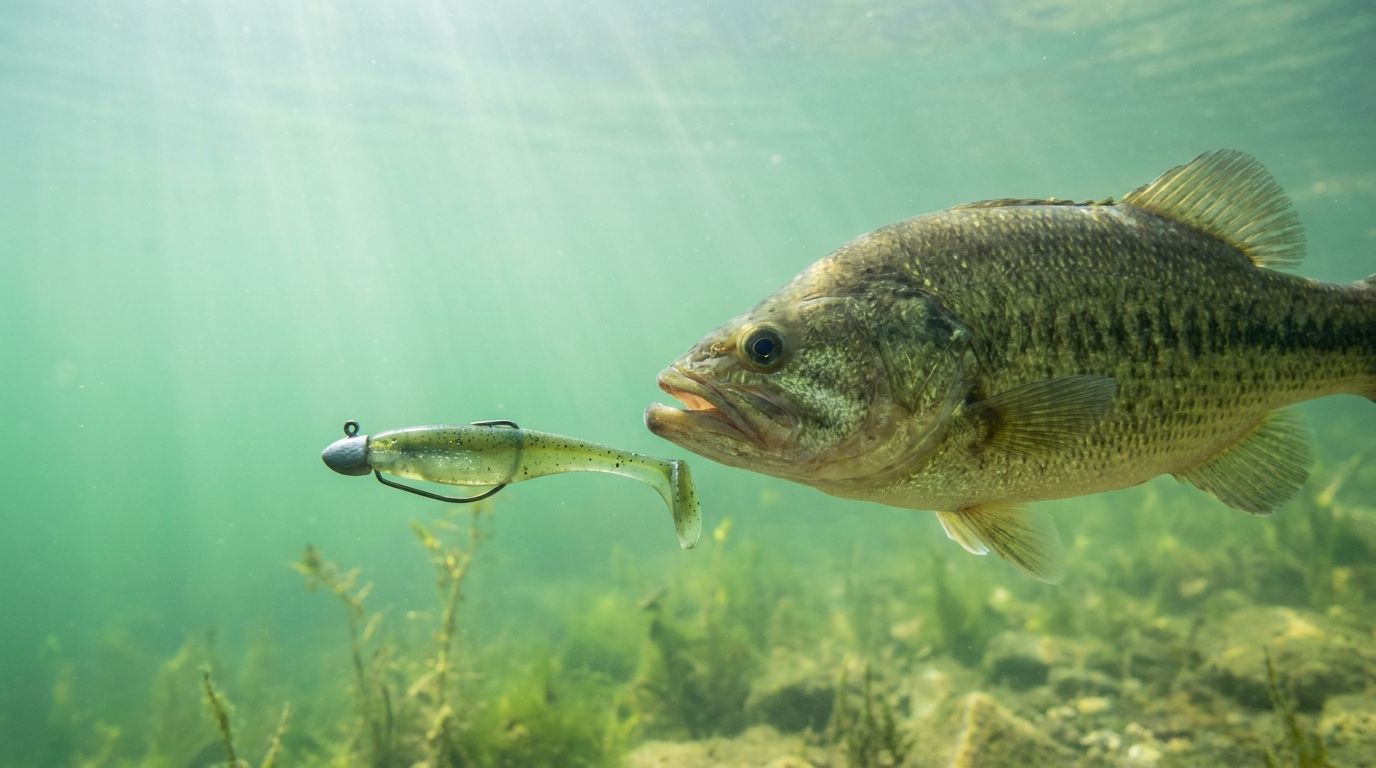
A paddle tail swimbait is simple: cast it, keep it moving, and let the tail do the work. The power is in how natural it looks. It does not need flash, noise, or a wild retrieve to convince bass feeding on baitfish.
Why it works
The tail kicks at slow speed, sending vibration while the body keeps a baitfish profile. It can be fished high, low, fast, slow, open-hooked, or weedless.
Best setup
Use an exposed jighead in open water and a belly-weighted hook around grass. Match size to local forage. Small shad call for compact 3-inch baits, while larger bluegill or trout-shaped forage can justify bigger profiles.
How to fish it
Count it down to the right depth and reel steadily. Bump grass tops, brush the edge of dock shade, or slow-roll it across points. When a fish hits, keep reeling until the rod loads before setting the hook.
Where to throw it
Fish paddle tails over submerged grass, along riprap, around bridge pilings, across shallow flats, and near schooling bait. They shine when bass are feeding but not fully blowing up on top.
Common mistakes
The biggest mistake is fishing it too fast. Another is using a head that makes the bait roll sideways. If the lure rolls, rig it straighter or lighten the head.
Quick checklist
- Match bait size to forage
- Rig perfectly straight
- Count down before retrieving
- Keep reeling through the bite
- Use weedless hooks in grass
Final take
A paddle tail is not complicated, and that is the advantage. It gives you a natural baitfish look that covers water without looking forced.