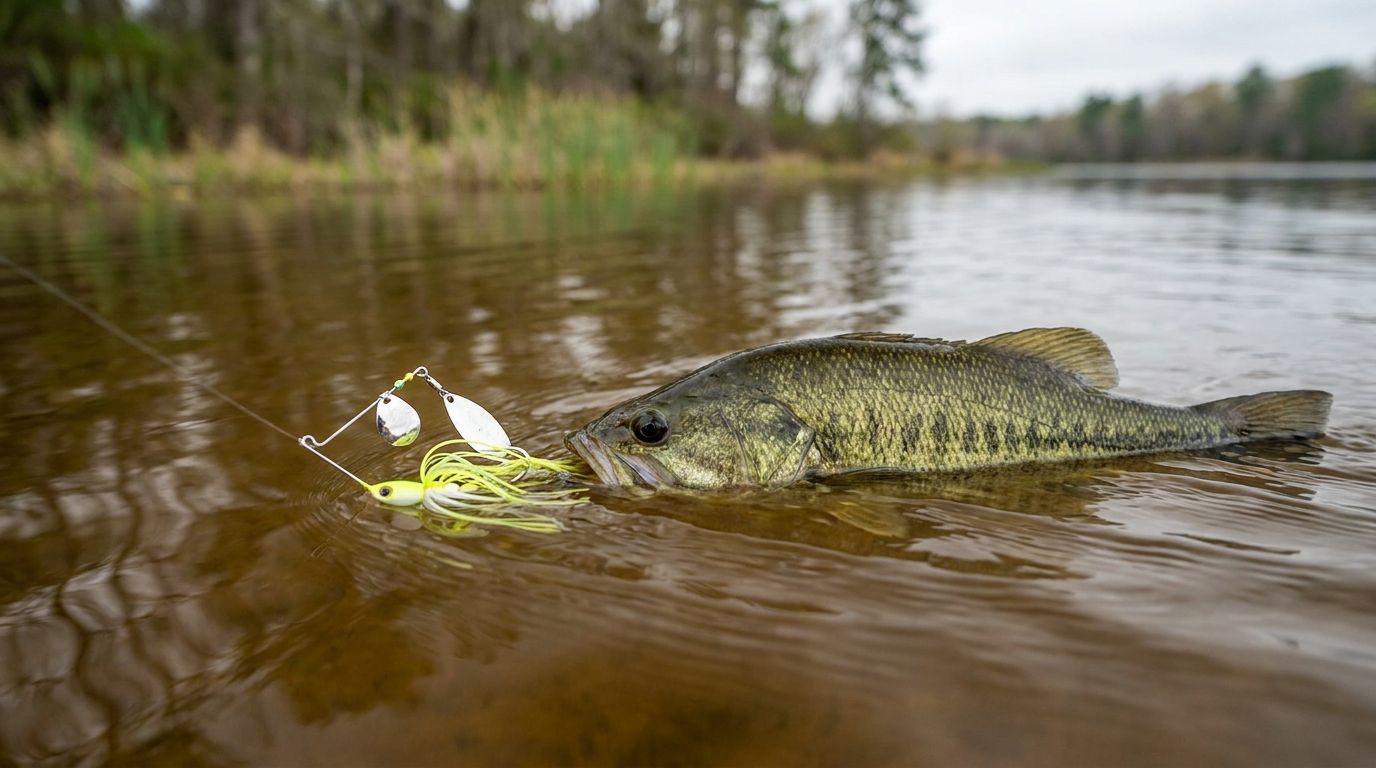
Muddy Water Can Be Productive
A lot of anglers see muddy water and assume the bite is over. In reality, muddy water often pushes bass shallow and tight to cover. That can make them easier to target if you use lures they can feel, hear, and silhouette.
The goal is not to make your lure look perfect. The goal is to put an easy-to-find meal close to a bass that is using cover as a reference point.
Best Lure Traits
Choose lures with vibration, bulk, and water displacement. Spinnerbaits, vibrating jigs, squarebills, jigs, buzzbaits, and bulky Texas rigs are all dependable choices.
Color should create contrast. Black and blue, chartreuse and white, dark green pumpkin, and muddy craw tones are reliable. In extremely dirty water, a simple dark silhouette can beat a detailed natural pattern.
Where to Cast
Muddy-water bass often pin to the bank, wood, grass clumps, dock posts, riprap, and current breaks. Cast tighter than you think you need to. A lure that lands three feet away may never be noticed.
| Water Condition | Best Starting Lure |
|-------|-------|
| Warm muddy water | Spinnerbait or vibrating jig |
| Cold muddy water | Jig or compact creature bait |
| Muddy with current | Squarebill near breaks |
| Muddy low light | Buzzbait or dark topwater |
Retrieve Adjustments
Slow down enough for the lure to bump cover. Deflection is critical because it helps bass locate the bait and react. A squarebill ticking wood or a spinnerbait brushing grass is much better than a clean retrieve through empty water.
For craw-based dirty-water options, visit the crawdad page, or use the rock bank craw kit when hard cover is present.
Biggest Mistake
Do not fish muddy water like clear water. Long casts across open water usually fail. Short, accurate casts to high-percentage cover are the deal.
For runoff and water condition information, the National Weather Service is useful before planning a trip.