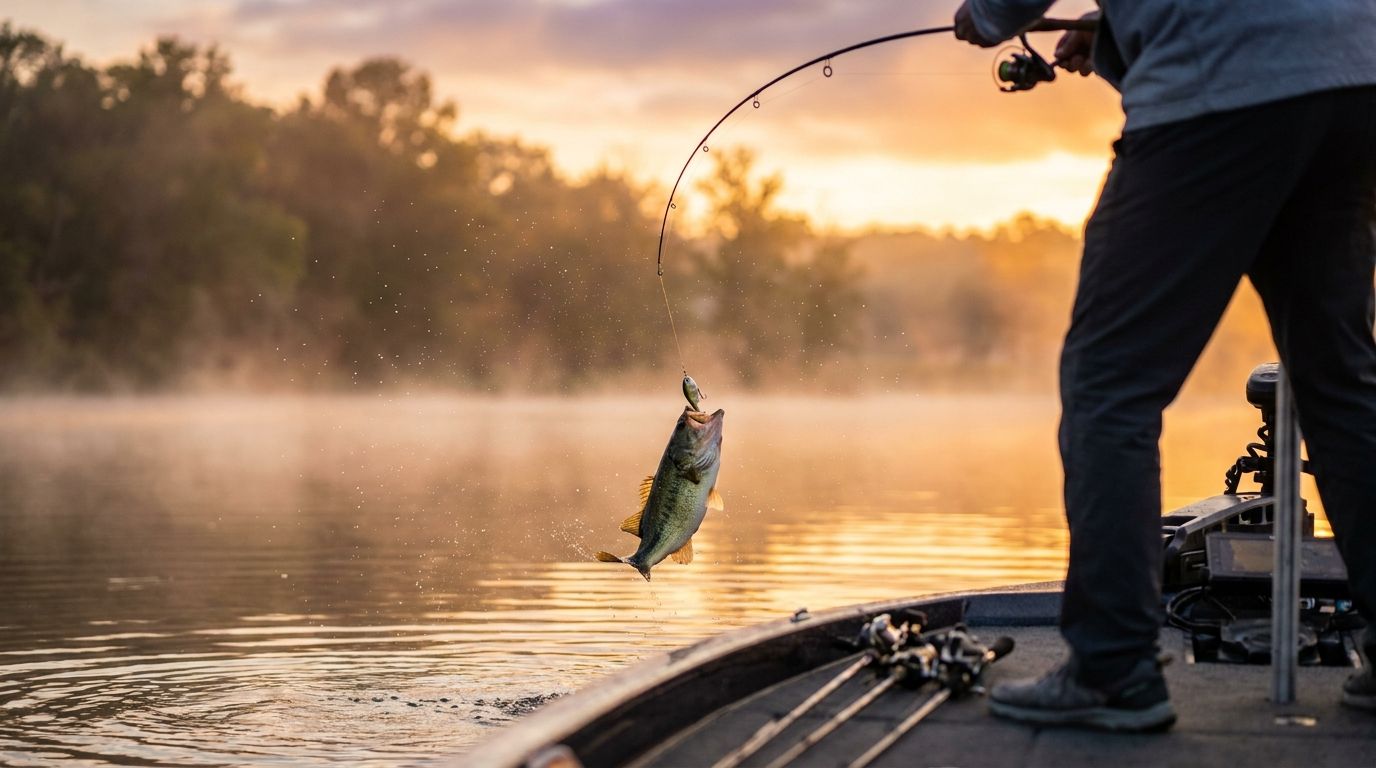
The Window Is Real and It's Narrow
The morning topwater bite isn't a myth or a romantic notion. It's a genuine, predictable feeding pattern driven by water temperature, light conditions, and bass behavior. But it's also shorter than most anglers realize.
In late spring and early summer (water temperatures 65°F–78°F), the productive morning topwater window typically runs from about 20 minutes before first light to 8:00–9:00 AM. As the sun climbs and surface light increases, bass move off the shallows and the topwater bite ends — sometimes abruptly.
The anglers who maximize this window are in position before first light, on the right water, with the right baits rigged and ready. Everything else is secondary.
Why the Morning Window Exists
Three factors converge at dawn to create exceptional topwater conditions:
1. Light level is right for ambush. Bass in shallow water at low light have an advantage over prey. The bass can see up into the lighter water near the surface while remaining in relative darkness below. When that advantage disappears (bright sun, calm clear water), bass retreat.
2. Water temperature peaks. Surface water temperature in the shallows reaches its daily maximum overnight to early morning, carrying over from the previous afternoon's warming. The warmest water in the system at dawn is the shallow water — and warm, oxygenated water activates bass.
3. Baitfish are active and shallow. Shad, bluegill, and other prey species feed near the surface at dawn. The surface activity of baitfish is what brings bass shallow in the first place. When baitfish are visible and audible, bass commit to the surface feeding lane.
Getting There First
"Be there before first light" is advice most anglers hear and ignore. They arrive at the ramp at 6:30 AM, get on the water at 7:00, and fish topwater from 7:15 to 9:00. They catch some fish. But the best part of the bite — the 30–45 minutes before and just after sunrise — is what they missed.
If the lake is a 20-minute run from the ramp to your topwater spot, you need to be launched and running in the dark. This means:
- Ramp access confirmed (early-morning ramp etiquette)
- Boat rigged the night before — no fumbling with tackle in the dark
- GPS route to your first topwater location pre-programmed
- Two to three topwater rods rigged and accessible
Choosing Your Morning Locations
Not all shallow water produces equally in the morning. The highest-percentage morning topwater locations:
Rip-rap and rocky banks with shad spawn activity: In late spring and early summer, shad spawn along rocky banks at dawn. The shad commotion in 1–2 feet of water over rip-rap is a morning topwater gold mine. Work parallel to the bank 15–20 feet out, throwing toward the rocks.
Grass edges: The outside edge of early-summer vegetation (hydrilla, milfoil, lily pads) at dawn. Bass that spent the night inside the grass move to the edges at dawn to feed. Work parallel to the grass edge.
Cove mouths and secondary points: Bass that have been on offshore structure overnight push shallow into cove mouths at dawn. The secondary point where the creek arm meets the main lake is a common first-light concentration point.
Dock ends and floating dock rows: Bass use docks as feeding ambush points at dawn. Work the dock ends first — face the dock so you can retrieve parallel to it and cover multiple positions in one cast.
Spawning and post-spawn flats with remaining fish: Even after the main spawn is complete, individual fish stage on or near spawning flats in the early morning through late spring. Topwater on these flats at dawn catches fish that have reverted to the area.
Bait Selection for the Morning Window
Very Early (Pre-Sunrise to Sunrise)
Buzzbait: The noise carries in low-light, calm conditions. Bass don't need to see it. They home in on sound and strike by feel. Buzz parallel to banks, over grass, along dock lines. The first 30 minutes of light are the buzzbait's best window.
Walking bait (larger): A 110mm Spook or walking bait with a rattle creates enough commotion to attract fish in near-darkness. Walk slowly with longer pauses.
Sunrise to 8 AM
Whopper Plopper: The prop tail creates continuous noise and surface disruption. The River2Sea Whopper Plopper 90 Bluegill (/products/whopper-plopper-90-bluegill) is an excellent dawn bait because it works on a steady retrieve and doesn't require the cadenced rod work of a walking bait.
Walking bait: As light improves, the walking bait becomes easier to track and work precisely. Bass can see it better and will track it more confidently.
Popper: Around dock edges and in pockets, a popper's more subtle action appeals to fish that are feeding selectively. Especially effective on calm, clear mornings.
8 AM–10 AM (The Fade)
As the window closes, transition from topwater to swimming presentations — swim jig along grass edges, topwater walked over deeper grass. The bite moves slightly deeper and slightly slower. See Chatterbait Spring Guide for the transition presentation.
After the Topwater Window
When the topwater bite dies, don't leave — fish the same water with different baits. The bass that were feeding on the surface are now directly below, sitting in the first available shade in 3–6 feet. A swim jig through a dock line at 9:00 AM often picks up the same fish that crushed a topwater at 6:45 AM.
For the full topwater picture across the spring and summer seasons, see Late Spring Topwater Fishing. The Shallow Ambush Topwater Kit and Bluegill Topwater Kit cover the lures needed for this pattern.
More morning topwater strategy at Wired2Fish and Bassmaster.