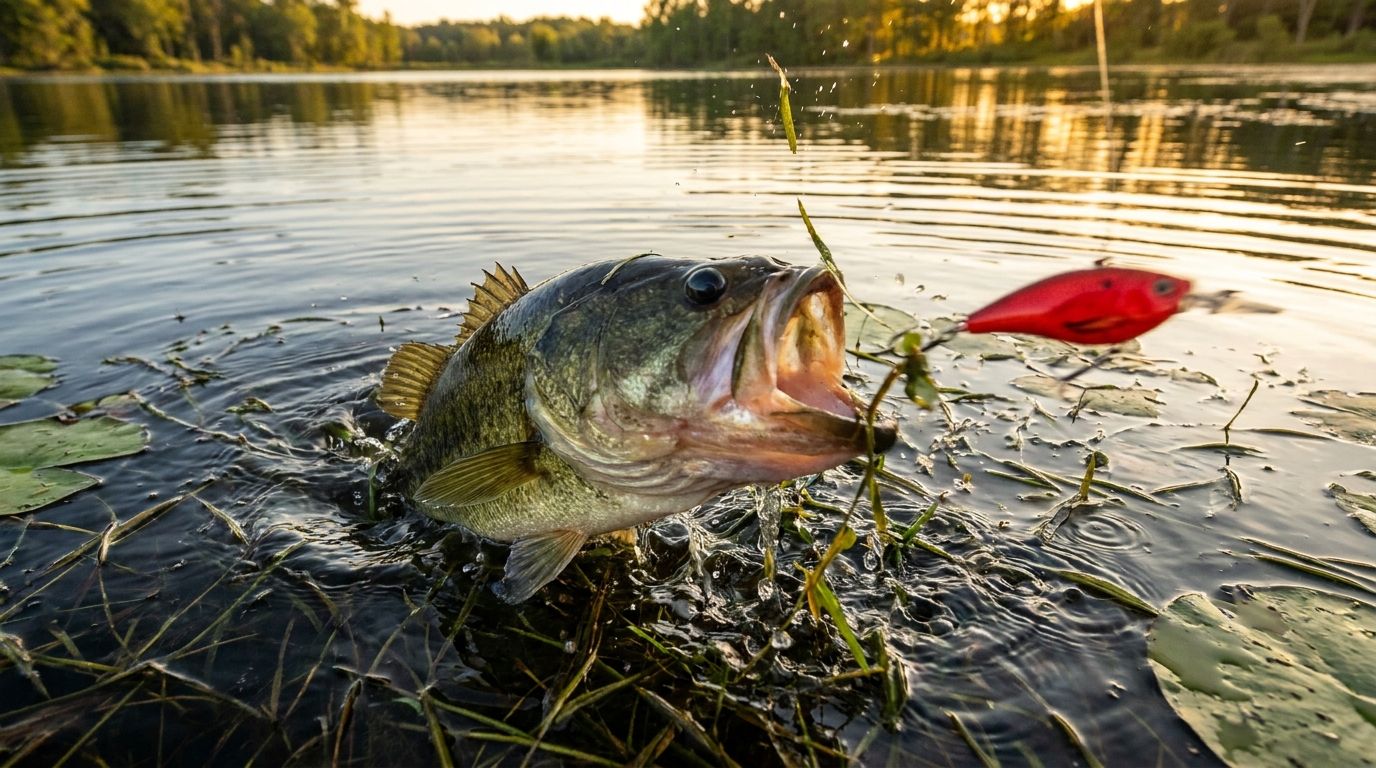
A lipless crankbait or vibration bait is one of the best tools for finding active bass around grass flats. It casts far, sinks, vibrates hard, and can be ripped free when it catches vegetation.
Why it works
The sudden rip from grass looks like prey escaping. That burst of speed and vibration often triggers bass even when they are not actively feeding.
Best setup
Use a medium or medium-heavy rod with enough tip to keep treble hooks pinned. Red, chrome, shad, gold, and bluegill patterns all have a place depending on water clarity and forage.
How to fish it
Cast over grass, let the bait tick the tops, then snap it free when it loads with vegetation. Try steady retrieves, yo-yo retrieves, and burn-and-pause retrieves until the fish tell you what they want.
Where to throw it
Use vibration baits on submerged grass, flats, riprap, points, and schooling fish. They are especially useful in spring and fall when bass roam and chase bait.
Common mistakes
Do not simply reel in salad every cast. If the bait is burying too deep, raise the rod tip, speed up, or use a lighter bait. Also keep hooks clean and sharp.
Quick checklist
- Tick grass, do not plow it
- Rip free with a snap
- Try yo-yo retrieves
- Use long casts
- Clean hooks often
Final take
A vibration bait is built to be noticed. Around grass, the magic happens when it hangs for a split second and then breaks free.