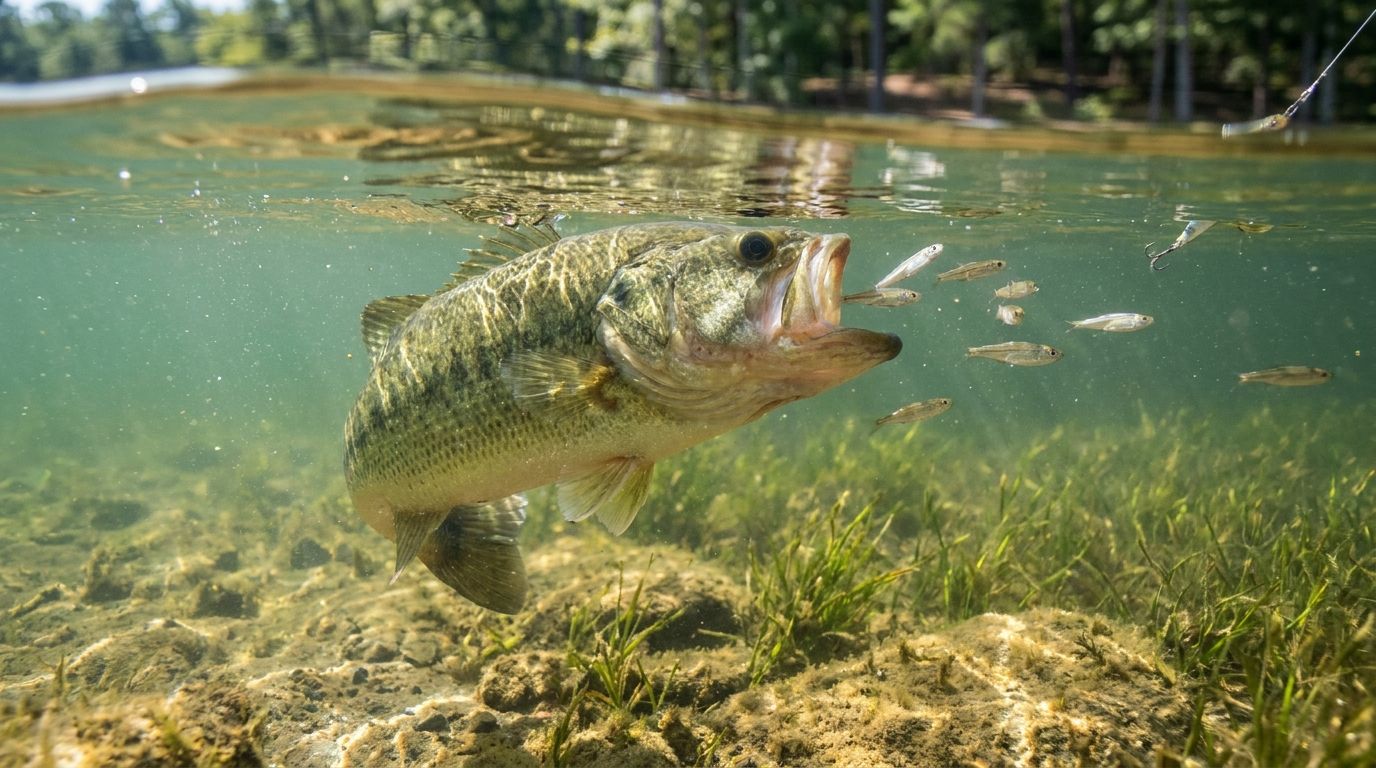
Picking a lure before reading the fish is backwards. Largemouth bass are ambush predators, so the first question is not “what lure is hot?” It is “where can a bass pin food and how active does it look right now?” Once you answer that, lure choice gets much easier.
Why it works
Bass usually position around cover, shade, edges, baitfish, and depth changes. A bass buried in grass is a different target than a bass chasing shad on a windy point. The same fish can want a slow worm in the morning and a moving bait when wind pushes bait into the bank.
Best setup
Carry three simple categories: a bottom bait, a moving bait, and a topwater. A Texas rig or jig covers slow bottom contact. A spinnerbait, crankbait, or swimbait covers water. A frog, popper, or walking bait covers low-light surface feeding.
How to fish it
Start by looking for the easiest ambush route. Cast past the target, bring the lure through the strike zone, and change speed before changing baits. If bass follow but do not commit, downsize or use a more natural color. If they never show themselves, slow down and make repeated casts to the best cover.
Where to throw it
Best starting spots are grass edges, laydowns, dock shade, points, riprap, creek mouths, and bluegill beds. In ponds, the best cover may be as simple as a drain pipe, a shade line, or one patch of weeds.
Common mistakes
The big mistake is random casting. Another mistake is forcing one favorite lure even after the conditions say otherwise. Let visibility, cover density, water temperature, and bait activity tell you what to throw.
Quick checklist
- Identify cover first
- Match lure speed to fish activity
- Use natural colors in clear water
- Use vibration or bulk in dirty water
- Change retrieve before changing lures
Final take
A good bass angler does not just collect lures. They read the water, pick a lane, and choose the bait that can move through that lane naturally.