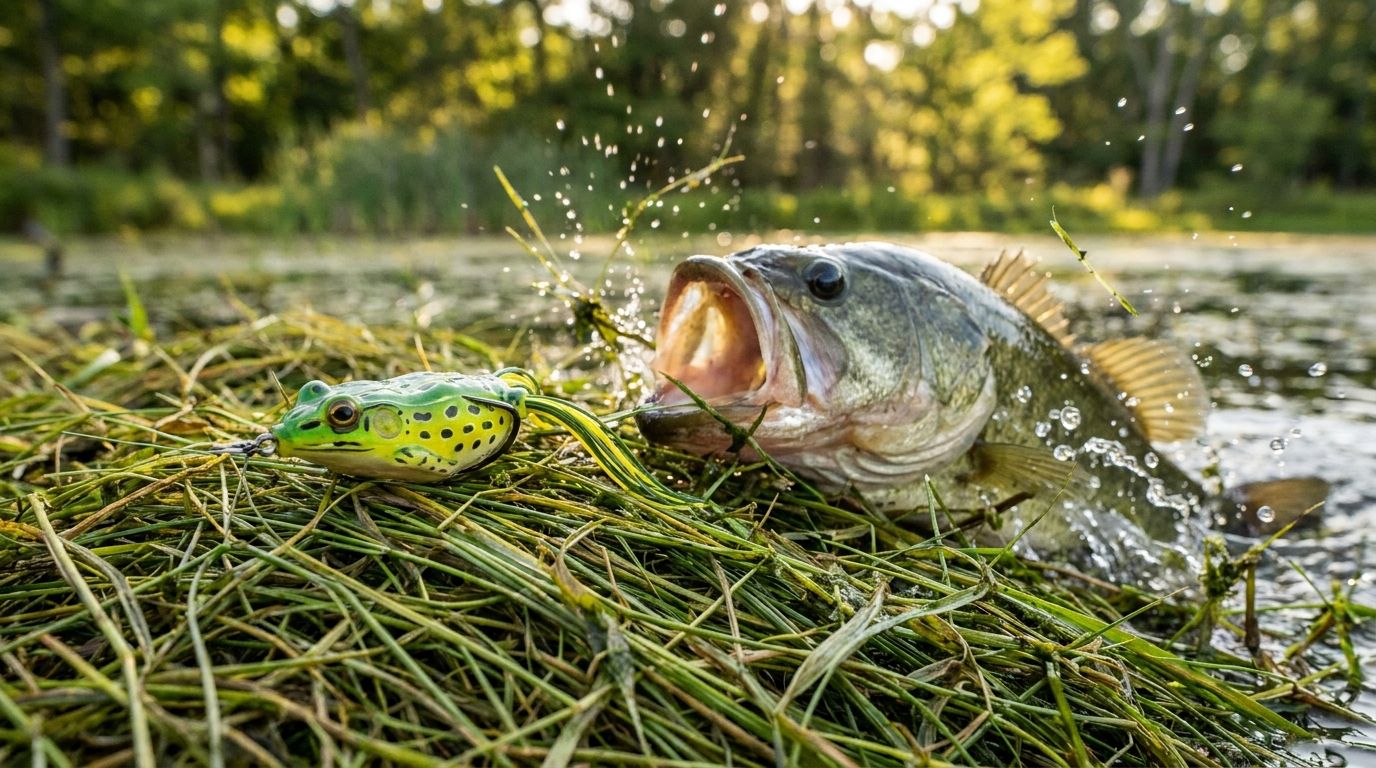
Why Grass Mats Hold Summer Bass
Grass mats create shade, oxygen, and ambush lanes. They also hold bluegill, frogs, insects, and baitfish. In summer, that combination can keep quality bass shallow even when other fish move offshore.
The best mats are rarely random. Look for points in the grass, holes, drains, isolated clumps, and edges near deeper water. A mat with bluegill popping under it or bait flickering around it deserves extra casts.
Picking the Right Frog
Use a hollow-body frog when the mat is thick enough to foul exposed hooks. Dark colors are easy for bass to silhouette in low light. Natural greens and sunfish tones are strong when bluegill are active. White can work when shad are present or when you need to see the bait clearly.
The frog collection and summer mats frog kit are natural starting points for this pattern.
Retrieve Cadence Matters
Do not work every cast the same way. Try three retrieves before leaving a mat:
- Steady crawl: Best over thick cheese mats and duckweed.
- Walk-and-pause: Best around holes and outside edges.
- Pop in place: Best when bass are buried under one small opening.
If a bass misses, avoid jerking the frog away instantly. Pause for a moment. If it does not return, throw a follow-up bait like a weightless stick bait or compact creature bait into the boil.
Hookset and Landing Tips
Wait until you feel weight before setting the hook. Then set hard and keep reeling. Heavy grass gives bass leverage, so the goal is to pull the fish up and across the mat before it buries.
Biggest Mistake
Many anglers fish only the pretty outside edge. The best bass may be under the thickest, ugliest part of the mat where shade is strongest. Pick mats apart from edge to interior before moving.
For aquatic vegetation and fisheries information, visit the Florida Fish and Wildlife Conservation Commission.