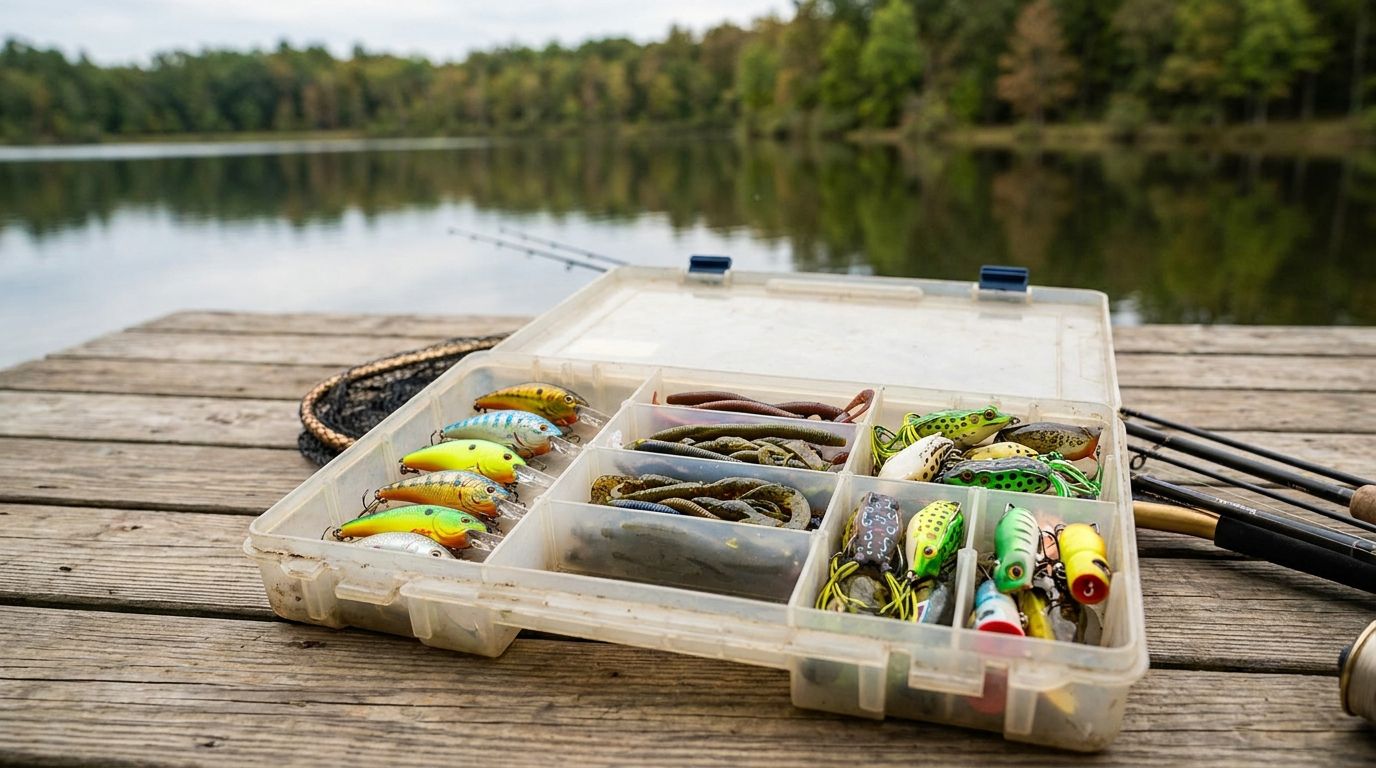
A tackle aisle can make you feel like you need everything. You do not. A good bass tackle box covers situations: top, middle, bottom, clear water, dirty water, open water, and heavy cover.
Why it works
Buying by category prevents duplicates. Instead of owning ten lures that do the same thing, you carry a few tools that solve different problems.
Best setup
Start with a Texas rig, jig, spinnerbait, crankbait, topwater, finesse worm, swimbait, hooks, weights, and spare line. Add specialty lures only when your water demands them.
How to fish it
Organize by job, not brand. Keep bottom baits together, moving baits together, topwater together, and terminal tackle separate. Before each trip, pack for water clarity, cover, season, and bank or boat access.
Where to throw it
Pond anglers can keep it simple: worms, small swimbaits, a topwater, and a spinnerbait. Lake anglers may need more depth ranges and offshore tools.
Common mistakes
The biggest mistake is buying colors before building categories. Another is carrying so much gear that you spend more time digging than fishing.
Quick checklist
- Cover top, middle, and bottom
- Carry clear and dirty water colors
- Keep terminal tackle stocked
- Pack by conditions
- Remove lures you never use
Final take
A smart tackle box is not the biggest box. It is the one that gives you a good answer for the water in front of you.