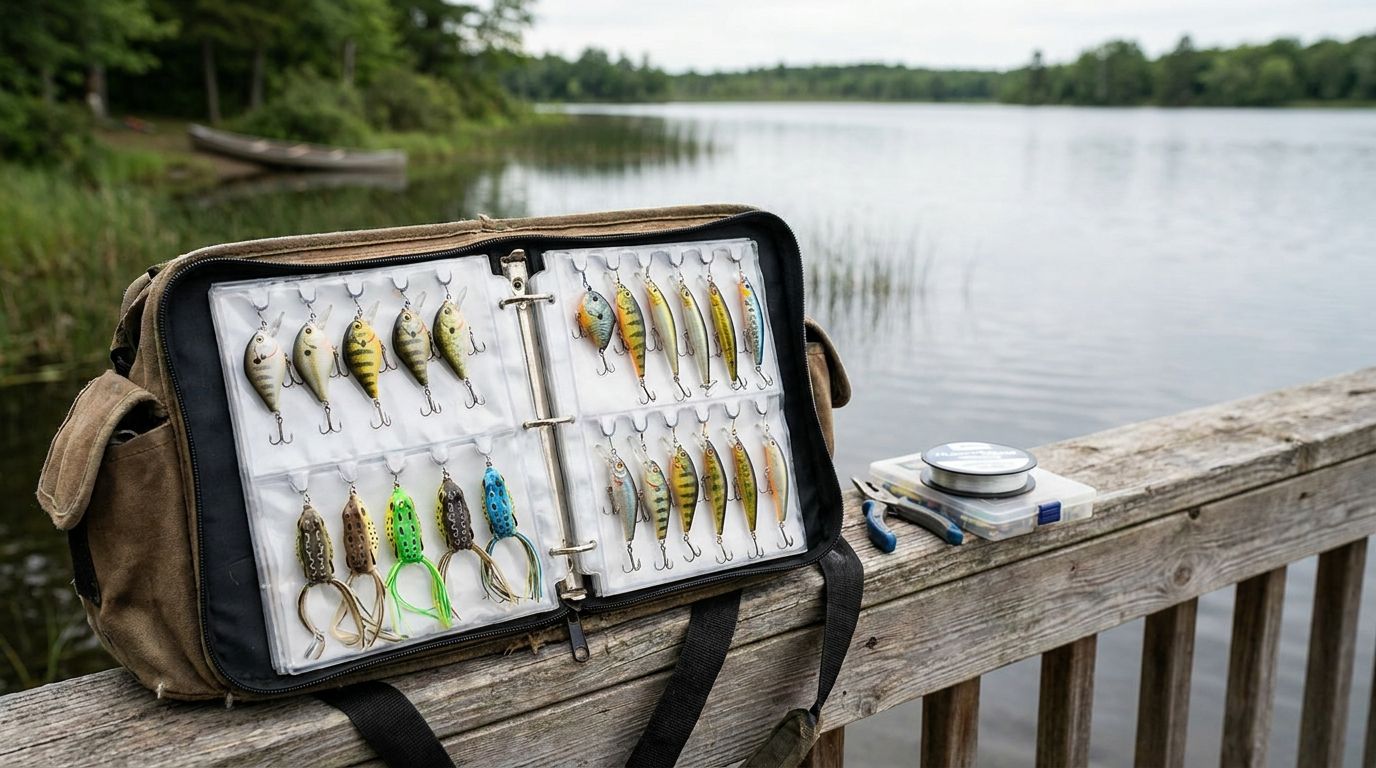
Hardbaits are easy to collect and easy to ruin. Treble hooks tangle, finishes chip, split rings rust, and the lure you need always ends up buried under ten others unless you organize with a system.
Why it works
Good storage makes you faster on the water. It also protects the action and hardware of crankbaits, jerkbaits, topwaters, and lipless baits.
Best setup
Use boxes with adjustable dividers or individual compartments. Separate shallow crankbaits, deep divers, jerkbaits, topwaters, and lipless baits. Add silica packs if moisture is a problem.
How to fish it
Dry lures before storage, check hooks after each trip, and replace rusty split rings. Keep confidence colors easy to reach. Label boxes by depth or bait type instead of tossing everything together.
Where to throw it
Boat anglers can carry more boxes, but bank and kayak anglers should pack one compact box by conditions. Bring only the depth ranges and lure styles you expect to use.
Common mistakes
Do not store wet lures in a sealed box for weeks. Rust spreads fast. Also avoid mixing giant baits with small treble-hook baits if you hate untangling hooks.
Quick checklist
- Dry before storing
- Sort by bait type
- Check hooks
- Replace rusty hardware
- Pack by trip conditions
Final take
Hardbait storage is not glamorous, but it keeps expensive lures fishable and saves time when the bite window opens.