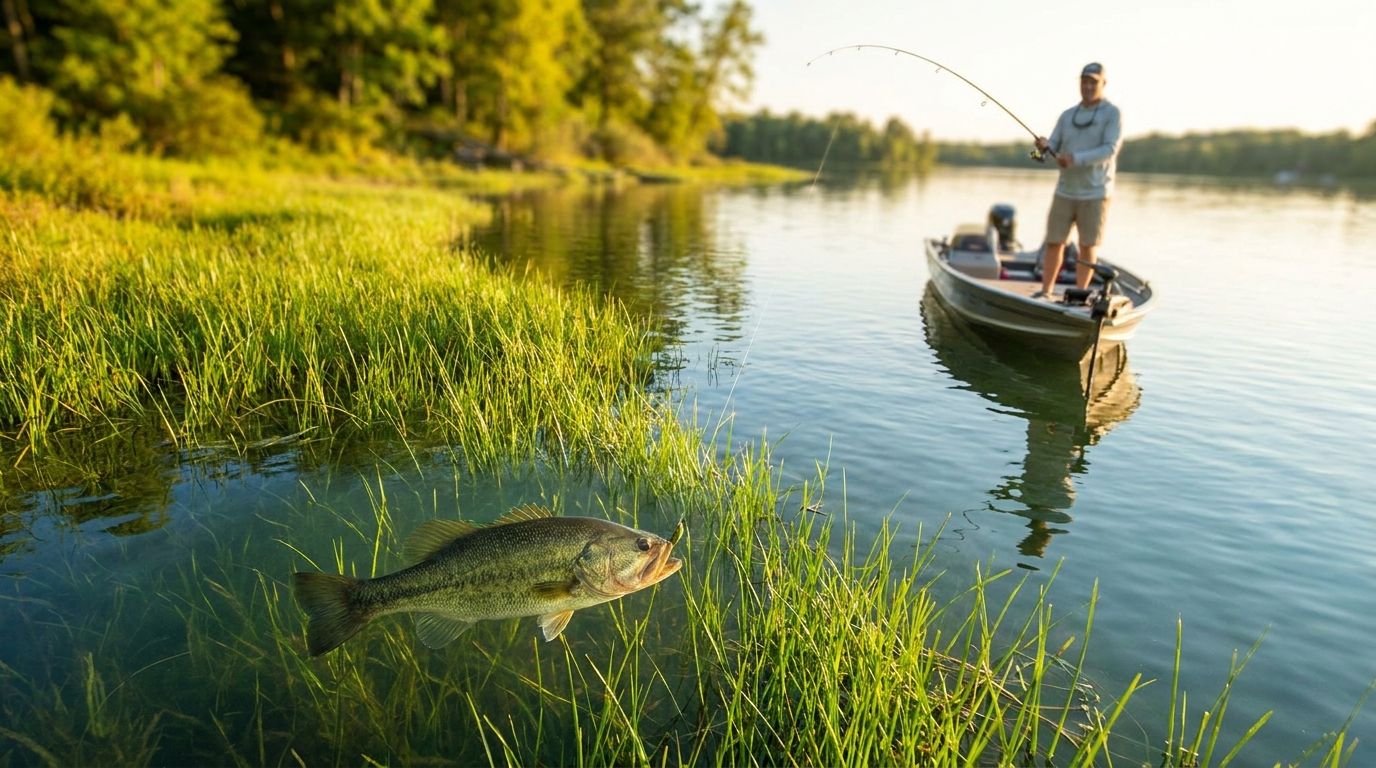
Why Grass Lines Matter
Grass creates oxygen, shade, ambush cover, and forage. Bass use it like a road system. The trick is finding the most useful section of the grass instead of fishing every green patch the same way.
A grass line can be an outside edge, inside edge, matted canopy, scattered clump, or submerged wall. Each one calls for a slightly different lure.
The Best Grass Features
Grass points are high-percentage because they let bass ambush prey from multiple angles. Holes in mats are feeding windows. Mixed vegetation can be better than uniform grass because it creates irregular edges. Grass near a drain, ditch, or depth change is especially valuable.
Lure Choices by Grass Type
| Grass Type | Best Lures |
|-------|-------|
| Scattered grass | Swim jig, vibrating jig, spinnerbait |
| Matted grass | Frog, punching rig |
| Clean outside edge | Swimbait, crankbait, Texas rig |
| Holes and lanes | Stick bait, creature bait, frog |
The frog page and summer mats frog kit are strong for surface vegetation. For bluegill-heavy grass, check the bluegill cover kit.
Retrieve Details
Make contact without constantly fouling. A swim jig should tick the grass and rip free. A frog should pause over holes. A Texas rig should fall into lanes instead of dragging across the top of everything.
Common Mistake
Many anglers fish the visible edge only. Bass may be on the inside edge near the bank in the morning, then on the outside edge later. Check both before abandoning a grass bed.
Final Tip
Grass fishing improves when you mark bites. If two fish come from the same depth or grass type, repeat that clue across the lake.
For aquatic plant and lake management information, see the University of Florida IFAS Extension.