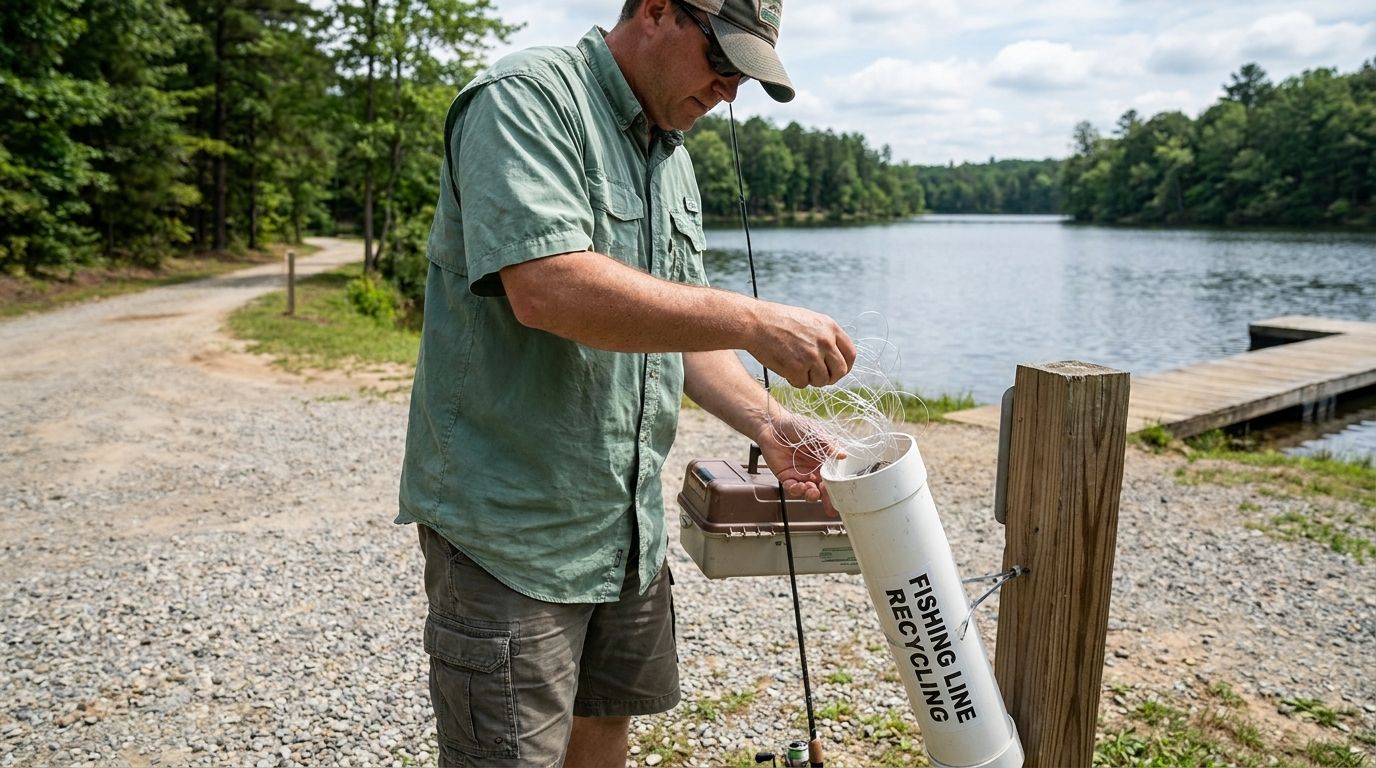
Every bass angler has cut off old line, replaced hooks, opened soft plastic bags, or clipped tag ends. Those small pieces seem harmless until they collect around ramps, banks, docks, and wildlife areas.
Why it works
Discarded line can tangle birds, turtles, fish, and boat props. Soft plastic scraps and packaging can also end up in the water. Clean habits protect the same cover, forage, and access points anglers depend on.
Best setup
Keep a small trash bag or container in your tackle bag. Store old line separately and use recycling tubes where available. Cut unusable line into shorter pieces before throwing it away so it is less likely to tangle wildlife.
How to fish it
Pack out every tag end, torn bait, used hook, and wrapper. After retying, put waste directly into a pocket or container instead of setting it down. At the end of the trip, empty the container.
Where to throw it
This matters most at bank spots, ramps, docks, and high-use pond access points. Those are the areas where litter builds up fastest.
Common mistakes
Do not assume someone else will clean it up. Also do not toss used soft plastics in the water; even if they look like bait, they do not belong there.
Quick checklist
- Carry a waste pouch
- Recycle line when possible
- Pack out soft plastics
- Pick up old hooks
- Leave bank spots cleaner
Final take
Protecting bass water is not complicated. Keep line and tackle waste out of the lake, and the fishing stays better for everyone.