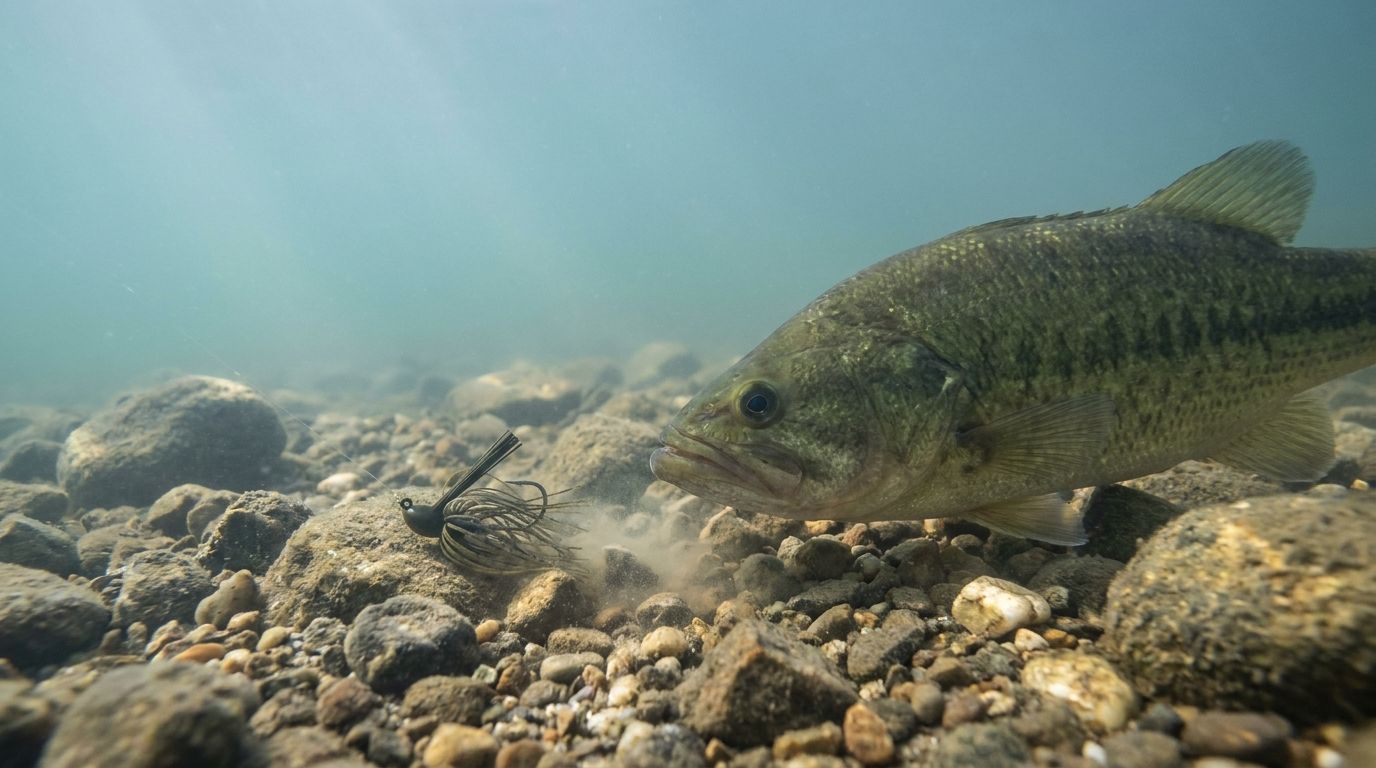
What Is a Finesse Jig?
A finesse jig is a compact, light jig head — typically 3/16 to 5/16 oz — with a smaller profile skirt and a lighter wire hook than a standard bass jig. The head shape varies: ball-head for rocky bottom, football for hard flat bottom, compact arkie-style for cover.
The distinction from a standard jig isn't just size. Finesse jigs are designed for lighter line, slower presentations, and situations where bass have had time to study baits. Cold, clear water in winter and early spring is exactly that situation.
When to Reach for the Finesse Jig
The finesse jig outperforms heavier presentations in these conditions:
- Water temperature below 52°F
- High water clarity — 3 feet visibility or better
- Post-cold-front conditions with bright sun and high pressure
- Heavily pressured fisheries where bass have seen a lot of baits
- Situations where bass are following but not eating
In stained water or when bass are aggressive, a 3/8 or 1/2 oz standard jig often outproduces because it gets down faster and creates more water displacement. But when the conditions above are present, go finesse.
Building the Right Finesse Jig Setup
Jig selection:
- 3/16 oz for 5–12 feet in calm conditions
- 1/4 oz for 10–20 feet or light current
- 5/16 oz for 20+ feet or faster current
A compact arkie-head or football-head jig with a 45-strand micro-cut skirt is ideal. Avoid oversized skirts — they create too much resistance and slow the fall unnaturally.
Trailer pairing:
The trailer choice significantly affects action and profile. In cold water, smaller is better.
- Small craw: 2.5–3 inch craw trailer for rocky or hard bottom — the Googan Krackin' Craw (/products/googan-krackin-craw) trimmed at the claws gives a compact, natural profile
- Paddle tail swimbait: When bass are more active or water is slightly warmer (48–55°F), a 2.5–3 inch paddle-tail adds subtle swimming action that still works in cold water
- Chunk trailer: A small solid chunk creates maximum bulk with minimal action — effective in very cold, clear water where subtle is everything
- 7'1" medium-light or medium spinning rod with a fast tip
- 10 lb braid to a 6–8 lb fluorocarbon leader (18–24 inches)
- Spinning reel, 2500–3000 series
The fluorocarbon leader is non-negotiable in clear water. Bass in 40°F clear reservoirs examine baits carefully.
The Cold-Water Finesse Jig Retrieve
The retrieve in cold water is almost no retrieve.
On rocky points and bluff walls:
Cast to the target, let the jig fall on a semi-slack line (watch for line movement on the fall — strikes are common). Once on bottom, drag the jig with the rod tip, moving it 6–8 inches at a time. Pause 3–5 seconds between moves. The skirt pulses during the pause; the trailer barely moves. That's exactly what bass want to see.
On hard, flat bottom:
A football jig head dragged with almost no lift is extremely effective. Keep the rod low and drag slowly. The flat-bottom wobble of a football head at slow speed is a distinct action that triggers cold-water bass.
On structure transitions:
Position so the jig moves from hard bottom to soft, or from the flat top of a point down the break. These transitions are where bass hold, and the jig coming over the edge and dropping triggers reflex strikes.
Color Selection for Cold, Clear Water
| Conditions | Jig Color | Trailer Color |
|-----------|-----------|---------------|
| Sunny, clear | Green pumpkin/brown | Natural green pumpkin |
| Overcast, clear | Black/blue | Blue craw |
| Post-front, bright | Green pumpkin/smoke | Watermelon seed |
| Early season, stained | Brown/orange | Orange/red |
Resist the urge to use brighter colors in cold, clear water. Bass have excellent vision and pressure from previous fishing makes them color-sensitive.
Finesse Jig vs. Other Cold-Water Options
| Technique | Best When |
|-----------|-----------|
| Finesse jig | Bass on hard bottom, not suspended |
| Drop shot | Bass suspended off bottom |
| Ned rig | Clearest conditions, most pressured fish |
| Blade bait | Vertical presentation directly over sonar marks |
The finesse jig covers water better than a Ned rig and stays on bottom better than a drop shot. It's the middle ground when fish are holding tight to structure rather than suspended.
Patience Is the Technique
Two things separate anglers who catch fish on finesse jigs in January from those who don't:
For the coldest days when even a finesse jig seems too much, see Cold-Water Finesse Fishing for Ned rig and drop shot alternatives. And check the Jig + Craw Trailer Kit for a complete finesse jig setup.
More on winter jig technique at Wired2Fish.