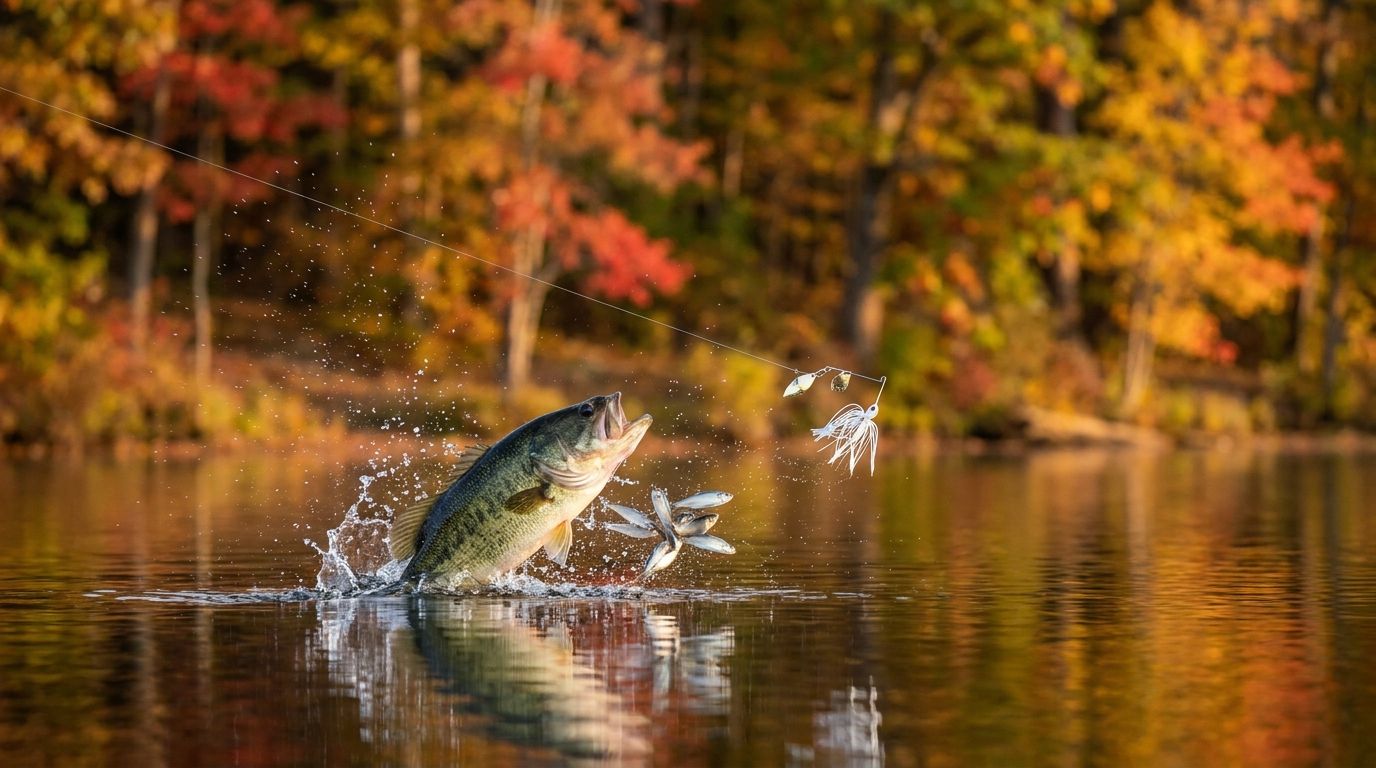
Fall Bass Are Often Bait-Driven
In fall, bass on many reservoirs and lakes become heavily focused on shad. They may chase bait into creeks, pockets, flats, and wind-blown banks. That movement can make the fishing great, but it can also make bass feel scattered.
The key is to follow the bait instead of simply fishing your favorite banks.
Where to Look First
Start around creek mouths, secondary points, shallow flats near deeper water, riprap, marina pockets, and wind-blown banks. Watch for birds, surface flickers, bait clouds, and sudden schooling activity.
Do not ignore the backs of creeks, but do not assume every creek has bait. The best areas usually show visible life.
Best Shad Lures for Fall
Walking baits, spinnerbaits, small swimbaits, squarebills, jerkbaits, lipless crankbaits, and underspins all catch fall bass. Match size first. If bass are feeding on small shad, a smaller bait often outfishes a bigger one.
The fall reservoir shad kit is built for this pattern, and the shad page can help you choose baitfish profiles.
Retrieve Strategy
Fall bass may chase fast, but they also miss often. Use direction changes, pauses, and contact with cover. A squarebill deflecting off rock or a spinnerbait ticking wood can trigger fish that follow a straight retrieve.
Common Mistake
The biggest fall mistake is fishing empty water because it looks good. If there is no bait, no birds, no wind, and no cover, keep moving.
Final Tip
When you catch one fall bass, make several more casts. Schooling fish often reload quickly, and the biggest bass may sit below smaller fish chasing on top.
For lake and fisheries reports, check your state wildlife department. A helpful national directory is available through Take Me Fishing.