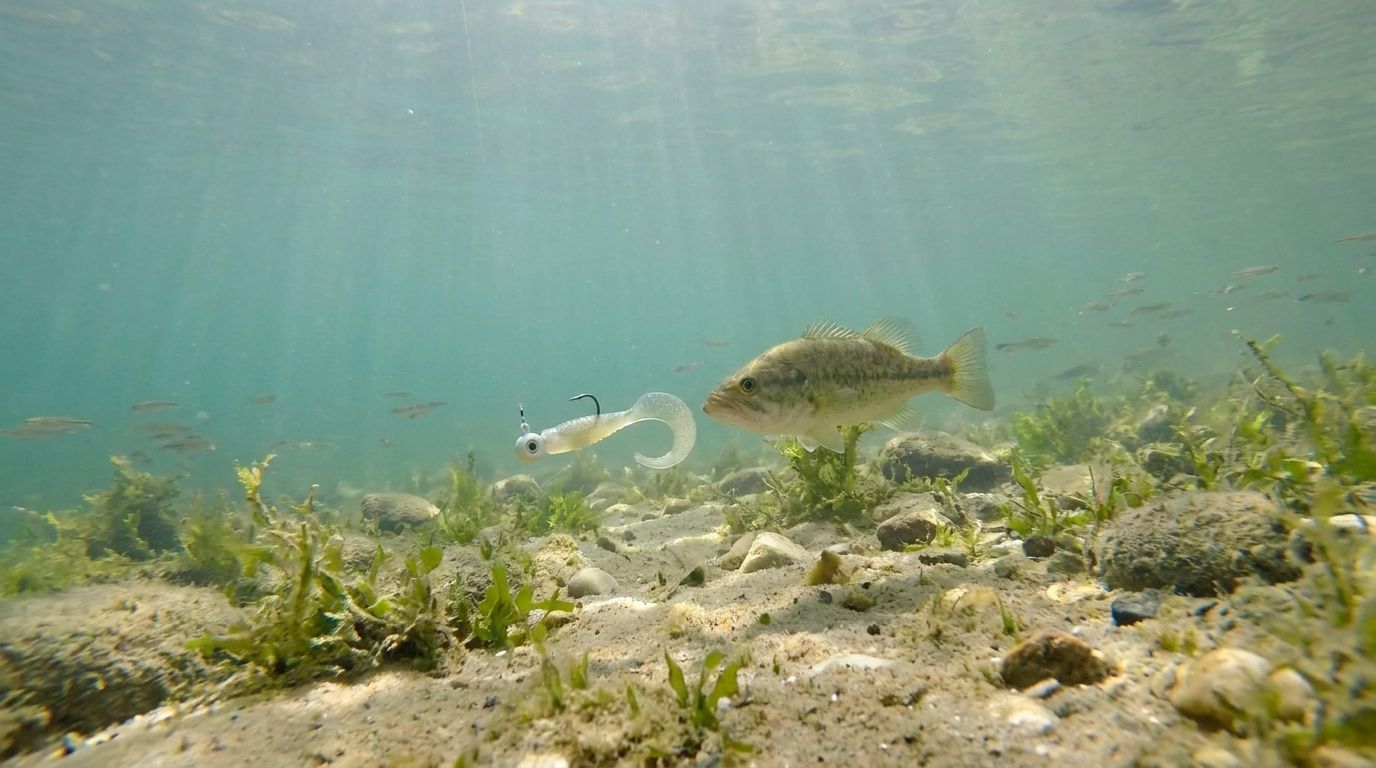
Curly tail grubs are easy to overlook because they are small and old-school. That is exactly why they still work. In pressured ponds, clear creeks, and tough cold-front conditions, a small grub can get bites that bigger swimbaits miss.
Why it works
The tail starts moving at slow speeds, so the bait looks alive without heavy rod action. It can imitate a baitfish, leech, small craw, or insect larva depending on color and retrieve.
Best setup
Rig a 3-inch to 4-inch grub on a ball-head jig. Use a lighter head for shallow water and a heavier head when current or depth requires it. White, smoke, green pumpkin, and chartreuse are reliable colors.
How to fish it
Cast it out, let it sink to the depth you want, and reel slowly. Add pauses near cover. If fish are following, stop the bait for half a second and restart. That speed change often triggers the strike.
Where to throw it
Use grubs around riprap, docks, shallow grass edges, creek mouths, and pond banks. They are also excellent for bank anglers because one bait can cover shallow water, mid-depth, and light current.
Common mistakes
Do not overpower the bait with too heavy a jighead. A grub that rockets to bottom loses its natural swim. Also keep the tail straight and free; a twisted body can spin and cause line twist.
Quick checklist
- Rig the body straight
- Start with a slow steady retrieve
- Pause near cover
- Use lighter heads in shallow water
- Retie after rocks
Final take
When bass will not commit to a big presentation, a small curly tail grub gives them an easy meal with just enough action to notice.