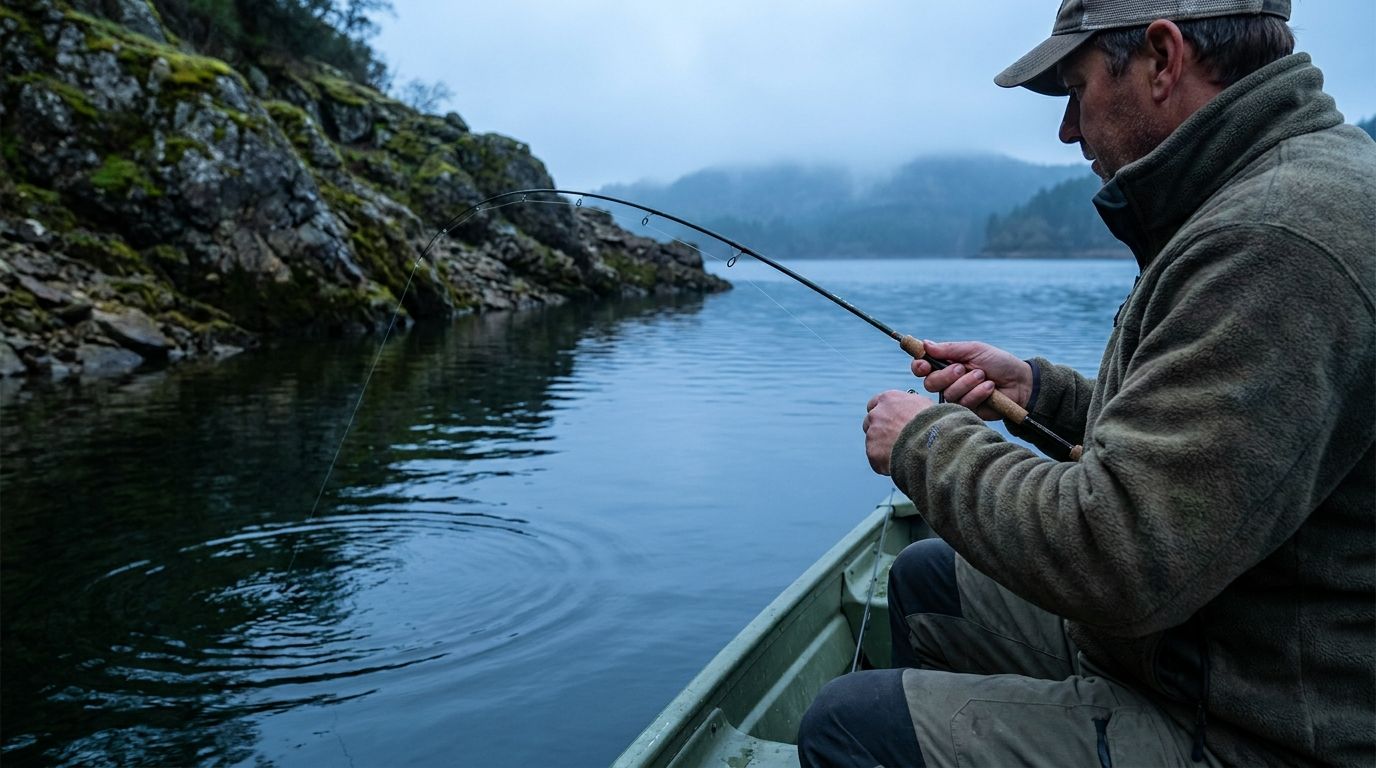
What a Cold Front Does to Bass
A cold front usually brings brighter skies, higher pressure, cooler nights, and changing wind. Bass do not disappear, but they often stop roaming and move tighter to cover or slightly deeper edges.
The mistake is assuming no fish will bite. A cold front bite is usually smaller, slower, and more precise. You need to put the lure closer to the fish and leave it there longer.
Best Places to Look
Focus on cover that gives bass security: docks, laydowns, grass edges, brush piles, rock transitions, bluff ends, and the first drop near spawning or feeding flats. In clear water, suspended bass may still eat a jerkbait. In stained water, a jig or Texas rig is usually easier for them to track.
Lures That Keep You in the Game
A suspending jerkbait is excellent when bass are looking up but not chasing far. A compact jig works around rock and wood. A shaky head or Ned rig can get bites when fish are neutral. A weightless stick bait is useful around shallow cover because it falls slowly.
For baitfish-focused cold front fishing, check the cold-front jerkbait shad kit. For bottom contact, the jig craw trailer kit is a better fit.
Retrieve Rules
Pause longer than feels comfortable. Drag instead of hopping. Make multiple casts to the same target. If a bass is positioned under a dock or beside a stump, the first cast may only alert it. The second or third cast may get eaten.
Final Thought
Cold fronts reward discipline. Choose high-percentage targets, fish them thoroughly, and avoid constant lure changes. Your best bite may come from the most obvious piece of cover on the lake.
For weather changes before your trip, review local forecasts from the National Weather Service.