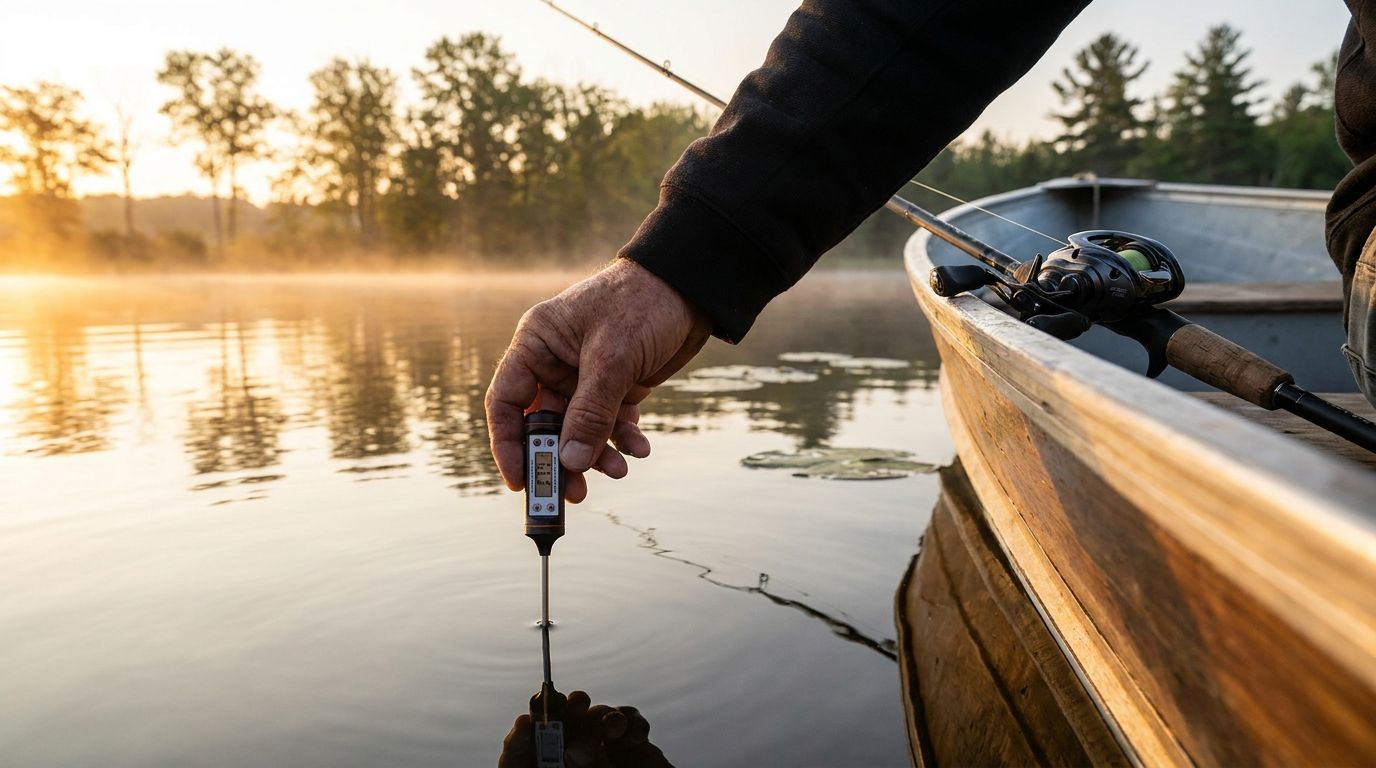
Temperature Is a Starting Point
Water temperature does not tell the whole story, but it gives you a useful starting point. Bass location, metabolism, spawning stage, and forage activity all change as water warms or cools.
Use temperature to choose lure speed and depth, then adjust based on clarity, weather, cover, and baitfish.
Cold Water
In colder water, bass usually prefer slower presentations. Jerkbaits, finesse jigs, Ned rigs, blade baits, and small swimbaits are strong. Natural shad and subtle craw colors work well.
The cold-front jerkbait shad kit fits this range.
Cool to Warming Water
As water warms, bass move toward prespawn areas. Crawfish patterns, crankbaits, spinnerbaits, jigs, and jerkbaits all become useful. Rock banks and secondary points deserve attention.
Use the prespawn craw kit when crawfish are active.
Warm Water
Warm water opens the door for topwater, swim jigs, frogs, Texas rigs, swimbaits, and offshore shad patterns. Bass may feed shallow early and move to shade or depth later.
Hot Water
In hot conditions, focus on oxygen, shade, current, grass, and deep bait. Frogs, big worms, drop shots, deep swimbaits, and jigs are all options.
Quick Guide
| Water Feel | Lure Mood |
|-------|-------|
| Cold | Slow and subtle |
| Warming | Craw and reaction |
| Warm | Forage variety |
| Hot | Shade, oxygen, depth |
Final Tip
Do not let temperature override evidence. If bass are schooling on shad in cool water, throw a shad bait. If they are buried in grass during heat, fish the grass.
For lake temperature and water data, check USGS Water Data.