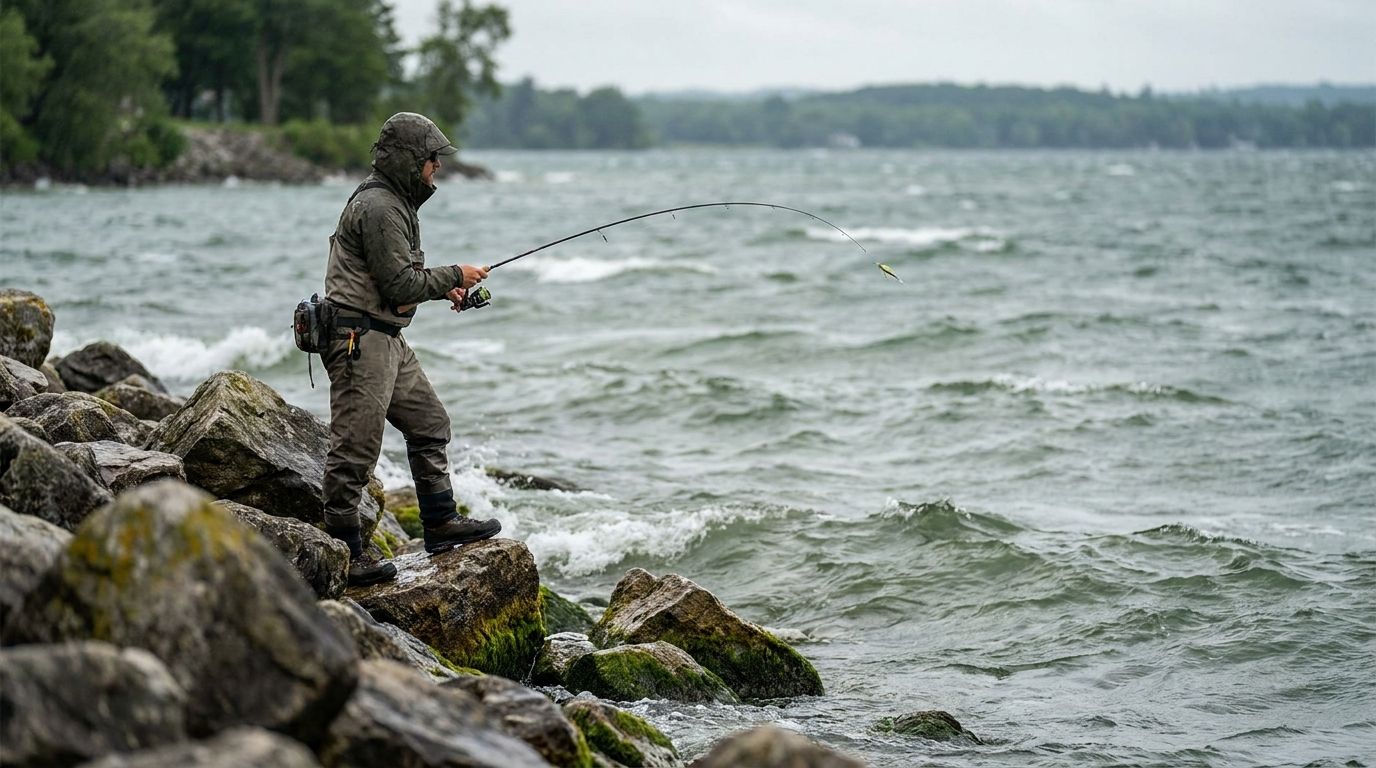
Wind Is Often Your Friend
Wind can make boat control and casting harder, but it usually helps the bite. Wind breaks up light penetration, moves plankton and baitfish, creates current, and makes bass more willing to chase.
The key is choosing wind that improves a spot instead of fighting unsafe or unproductive water.
Where Wind Helps Most
Wind-blown points, riprap, grass edges, seawalls, docks, and shallow flats can all turn on. Look for bait pushed into the area. If the wind is blowing into a bank with no cover, no bait, and no depth change, it may not matter.
Best Wind Lures
Spinnerbaits are excellent because bass can feel and see them in broken water. Vibrating jigs, crankbaits, swimbaits, jerkbaits, and walking baits also work. In windy shad situations, white and baitfish colors are hard to beat.
Use the shad page or fall reservoir shad kit when wind is pushing bait.
Casting Strategy
Cast with the wind when possible for distance and control. If you must cast into the wind, use heavier lures and lower trajectories. Keep contact with your bait, especially with jerkbaits and soft plastics.
When Wind Hurts
Wind can muddy shallow water too much, make boat positioning unsafe, or push you off the best angle. If the water becomes unfishable, find a protected pocket with stained but not ruined water.
Common Mistake
Many anglers hide from all wind. Instead, look for manageable wind that hits a high-percentage structure. A little discomfort can produce a much better bite.
Final Tip
If a windy bank has bait, cover, and a good casting angle, fish it thoroughly before leaving.
For safe boating conditions and wind forecasts, check the National Weather Service.