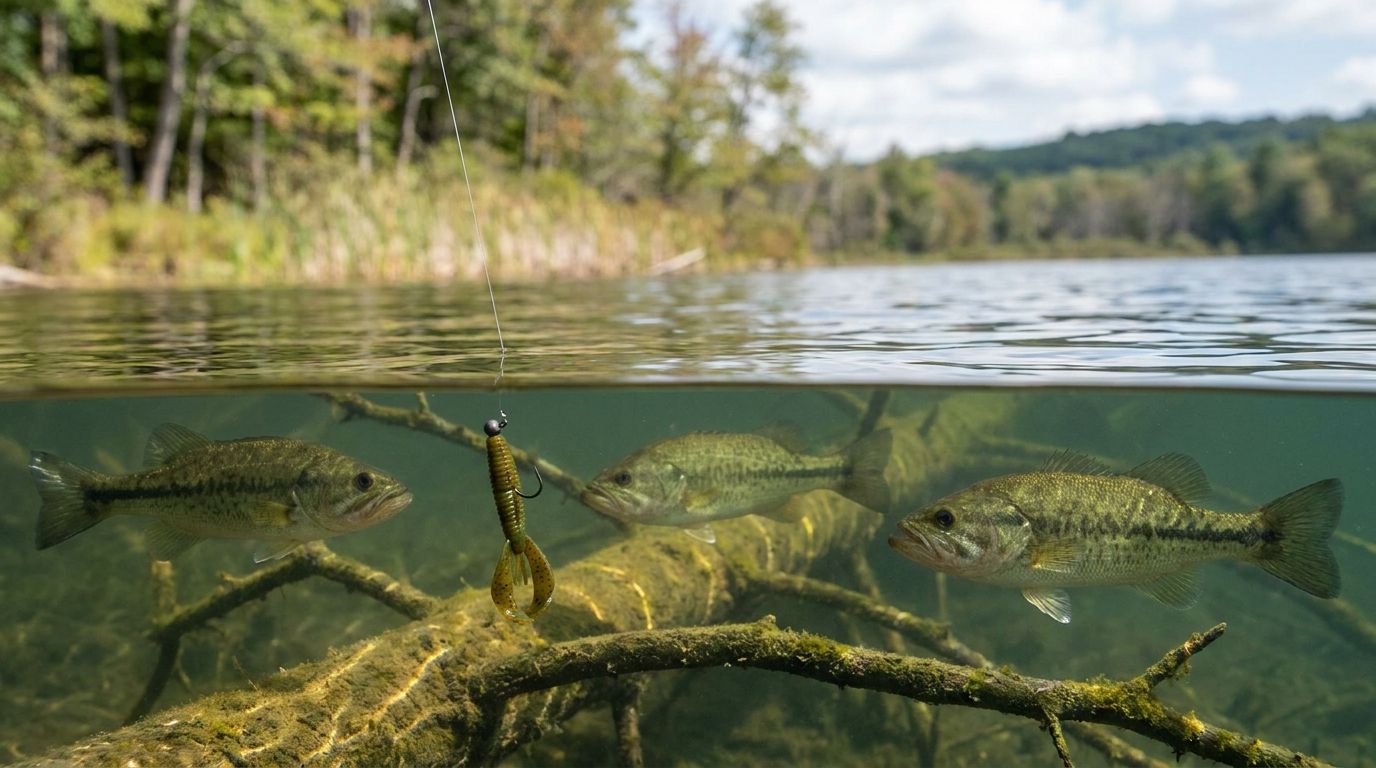
Laydowns Are More Than Visible Wood
A laydown gives bass shade, ambush cover, and a route from shallow to deep water. But not every limb is equal. The highest-percentage parts are usually the trunk, outside limbs, deepest end, shade pockets, and any place where the tree touches a depth change.
Good laydown fishing is methodical. One careless cast can spook the fish or bury your lure.
Best Lures for Laydowns
A jig is the classic choice because it imitates crawfish and bluegill while moving through wood well. A Texas-rigged creature bait is more weedless. A squarebill can trigger active fish by deflecting off limbs. A spinnerbait works around the outside branches when fish are aggressive.
Use the jig craw trailer kit for bottom-contact wood fishing or the bluegill cover kit when panfish are active.
How to Pick It Apart
Start with the outside edges before casting into the heart of the tree. Fish the shade side, then the sunny side, then the trunk. If the water is clear, make longer casts and use natural colors. In dirty water, cast tighter with darker bulkier baits.
Common Mistake
Many anglers drop a lure into the thickest part first and get hung. Fish the easy ambush spots before disturbing the center.
Better Angles
Cast parallel to the trunk when possible. A bait moving along the trunk stays in the strike zone longer than one crossing it quickly.
Final Tip
The best laydowns often have depth nearby. A tree on a flat bank may hold fish early, but a tree reaching into deeper water can hold bass all day.
For fish habitat and woody cover information, see USFWS habitat resources.