The Problem With Random Lure Selection
Most anglers pick lures based on what they caught fish on last time, what their buddy swears by, or what looked cool at the tackle shop. The result is a tackle box full of confidence baits that only sometimes match what bass are actually eating.
The forage calendar flips this process. Instead of starting with a lure and hoping it's right, you start with the forage — what are bass eating right now in your specific situation — and surface the lure that best matches it.
The Inputs
The calendar uses five pieces of information:
1. Date
Your fishing date maps to a seasonal phase. Prespawn, spawn, postspawn, summer, fall transition, and winter each have different primary forage species and different fishing depths.
2. ZIP Code
Seasonal phases shift significantly by region. Bass in Georgia spawn in April; bass in Minnesota don't spawn until late May or early June. Your ZIP code determines which regional calendar applies.
3. Waterbody Type
A reservoir in summer is completely different from a natural lake in summer. Reservoir bass follow shad offshore; natural-lake bass key on bluegill near weed edges. The waterbody type reshapes the forage matrix.
4. Depth Profile
"Shallow," "moderate," and "deep" tell the engine which depth band to prioritize within the seasonal forage matrix. A bass fishing 20 feet in summer is in shad territory; a bass in 2 feet in the same season might be a frog fish.
5. Optional Signals
These improve accuracy:
- Visible bait: Shad schools bumping the surface push reaction-bait recommendations
- Rock cover: Automatically boosts craw-pattern lures
- Bluegill beds: Shifts recommendations toward bluegill-pattern presentations
- Water clarity: Clear water pushes natural-color finesse baits; stained water pushes high-contrast rattling baits
- Time of day: Dawn and dusk boost topwater recommendations
Reading the Output
The engine returns:
The "Why This Fits" explanation tells you the reasoning: what the bass are doing in your specific combination of phase, waterbody, and depth.
Getting the Most Out of It
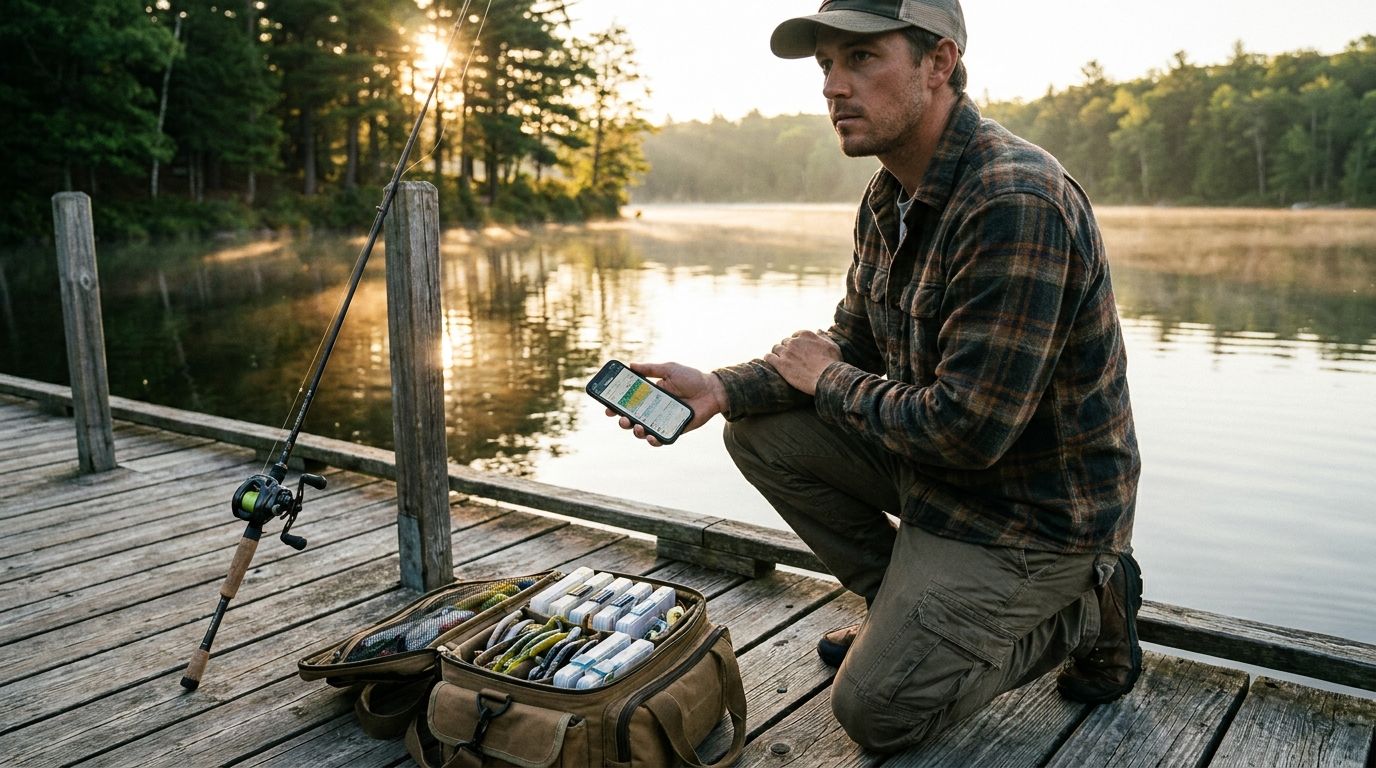
Run it the night before. Don't check it on the water — you'll be reaching for your phone instead of fishing. Enter your date and conditions the evening before, then commit to the top recommendation for the first two hours.
Use the signals. The base recommendation without signals is good; with accurate signals it's significantly better. Take 30 extra seconds to check your water clarity and note what cover you'll be fishing.
Follow the forage, not the fish. If you're not getting bites but you know the forage match is right, move locations — don't change lures. Find fish that are in the right position to eat the right forage before you switch presentations.
Try the Lure Recommender for your next trip.