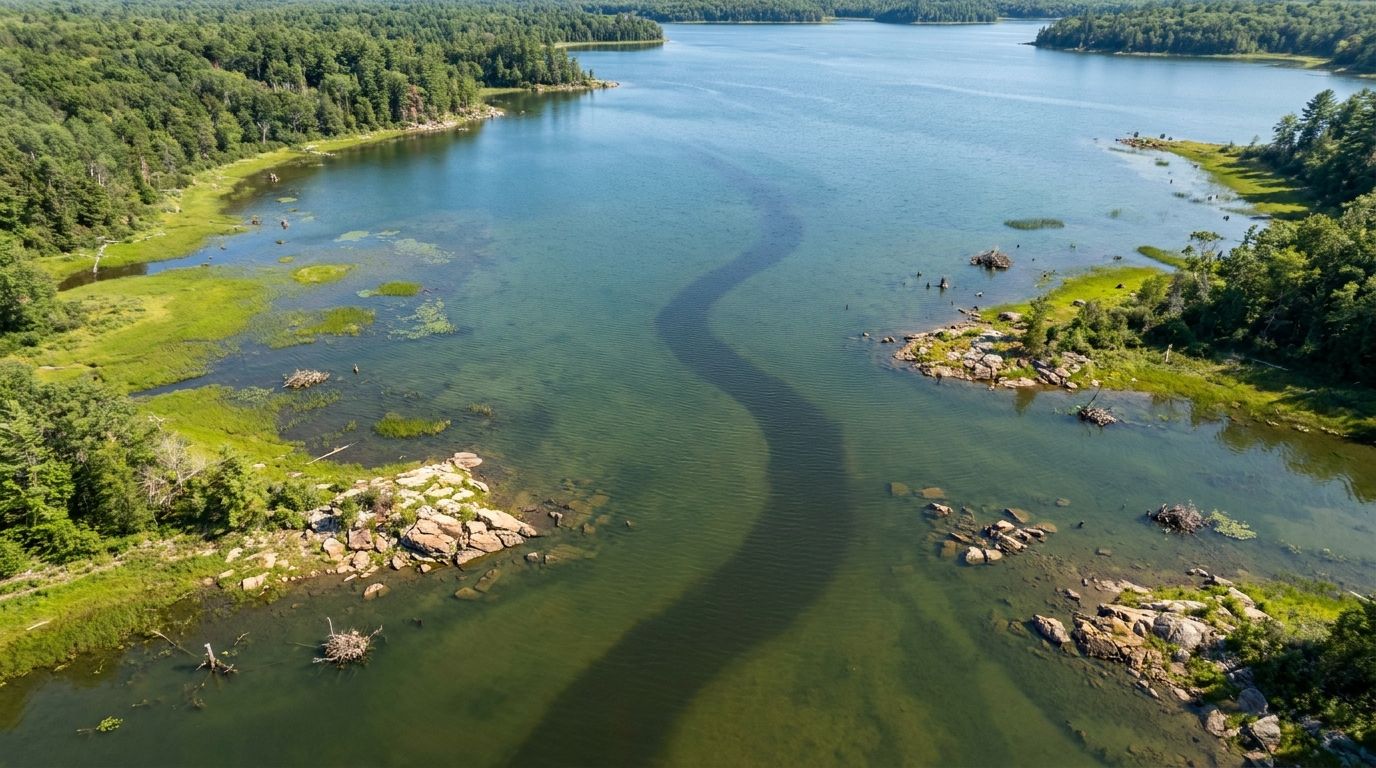
One Size Does Not Fit All
The biggest mistake tournament anglers make when fishing unfamiliar water is carrying over assumptions from their home lake. A technique that dominates on a Tennessee reservoir might be completely irrelevant on a natural lake in Wisconsin — even at the same time of year.
Body of water type shapes the forage community, the bass behavior, and the lure selection at least as much as the season does.
Reservoirs: A Shad-First Fishery
Most Southern and Midwestern reservoirs were built in river valleys by damming a main river and its tributaries. The dominant baitfish in these systems is almost always shad — threadfin shad in the South, gizzard shad across a broader range.
Why shad dominate reservoirs:
- Open main-lake basins provide ideal habitat for schooling baitfish
- Shad populations follow predictable depth migrations: deep in summer, shallow in fall
- Bass have evolved to key on shad movements
- Prespawn: Crawfish (rocky points), shad (late prespawn)
- Summer: Shad deep on ledges (primary), bluegill near docks
- Fall: Shad shallow (dominant), massive shad migration bites
- Winter: Suspended shad, deep craw near rock
Natural Lakes: The Bluegill Fishery
Natural lakes — especially the bowl-shaped glacial lakes common across the upper Midwest and Northeast — have more complex weed growth, more diverse forage communities, and more shallow-water holding areas year-round.
Why bluegill dominate natural lakes:
- Extensive weed growth provides ideal bluegill habitat
- Outside weed edges concentrate both bluegill and bass
- Less deep-water shad habitat compared to reservoirs
- Prespawn: Crawfish on gravel transitions
- Summer: Bluegill on deep weed edges (8–14 ft)
- Fall: Shad (secondary), bluegill-pattern cranks along dying weed edges
- Winter: Slow finesse presentations near deep weed edge
Ponds: A Generalist Fishery
Small ponds and private impoundments typically lack the shad populations of larger reservoirs. The forage community is more balanced: bluegill, small crawfish, frogs, and the occasional small shiner or minnow.
Pond forage by season:
- Spring: Crawfish (transitions), bluegill (starting in May)
- Summer: Frogs (if vegetation present), bluegill near cover
- Fall: Bluegill and small shad if present, lipless cranks covering water
- Winter: Finesse craw in deepest section
River Backwaters: The Ambush Fishery
River-connected backwaters and oxbow lakes have current influence, changing water levels, and forage that concentrates near current breaks. The forage mix is unique.
Backwater forage:
- Shad pushed by current into backwater pockets (fall is exceptional)
- Crawfish on rocky current breaks and eddy seams
- Bluegill in calm sections with vegetation
- Frogs in summer choke points
Use the Lure Recommender with "River/Backwater" selected for the most accurate recommendations for moving water.